


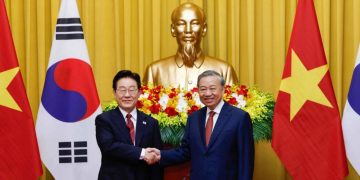


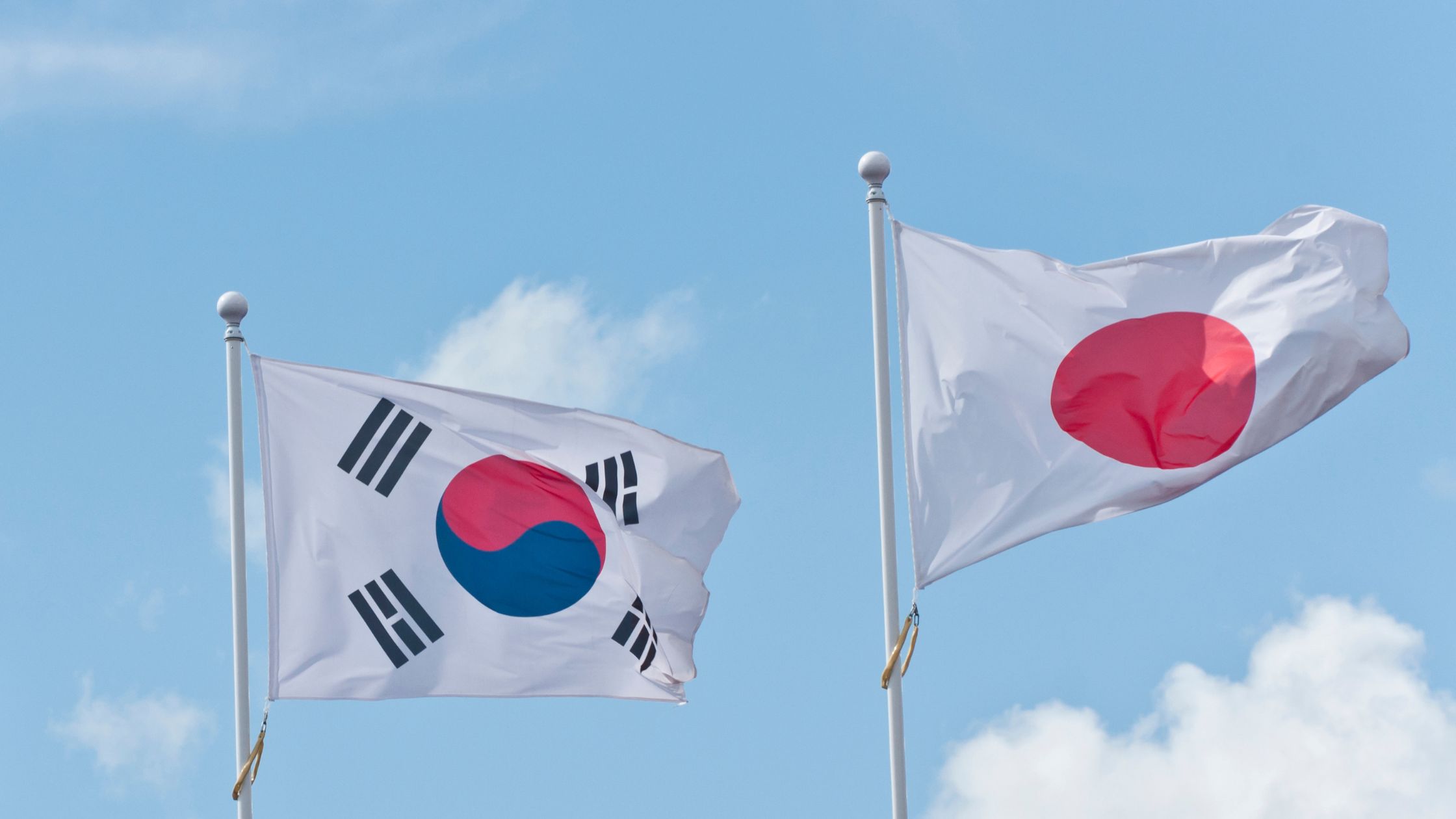
Japanese Prime Minister Shigeru Ishiba hosted South Korean President Lee Jae-myung in Tokyo on Saturday for their first official summit, a meeting seen as a step toward strengthening ties between the two neighbors. The leaders discussed deepening security coordination under their trilateral pact with the United States and emphasized the need to put aside historical disputes as they confront common regional and global challenges.

During the talks, Ishiba and Lee agreed to broaden cooperation beyond security, pledging joint efforts in clean energy, artificial intelligence, and demographic issues such as declining birth rates and aging populations. They also highlighted disaster prevention and regional revitalization as areas for partnership, while reaffirming their commitment to work with Washington in countering North Korea’s nuclear and missile programs.
The two leaders emphasized that cooperation between Tokyo and Seoul not only benefits their countries but also contributes to broader regional stability. They pledged to resume “shuttle diplomacy,” allowing regular reciprocal visits to maintain close communication.
As this year marks the 60th anniversary of the normalization of diplomatic relations in 1965, both leaders emphasized the importance of promoting people-to-people exchanges. Plans include expanding the working holiday visa program and exploring fast-track entry for South Korean travelers to Japan. These initiatives are designed to deepen public trust and strengthen bilateral goodwill at a time when both nations face growing external challenges.
Lee’s visit, his first official trip to Japan since taking office in June, carries symbolic weight as no South Korean president has previously chosen Tokyo as the first destination for a bilateral meeting. Japanese officials welcomed the gesture, interpreting it as a signal that Lee places significant importance on the partnership. For Ishiba, whose leadership has been questioned following his party’s election setback in July, the summit provided an opportunity to showcase diplomatic progress and bolster domestic support.
The leaders also reaffirmed their commitment to trilateral cooperation with the United States, particularly in countering North Korea’s nuclear and missile development programs. Both countries host a large U.S. military presence, with around 80,000 troops, dozens of warships, and hundreds of aircraft stationed across the region. Strengthening security coordination with Washington remains a top priority, especially as China’s influence in Asia continues to grow.
Trade and economic security featured prominently in the talks. Tokyo and Seoul recently agreed to impose 15 percent tariffs on U.S. imports of their goods after President Donald Trump threatened steeper duties. Lee’s upcoming meeting with Trump in Washington is expected to focus heavily on trade negotiations, defense cost-sharing, and broader regional security. Ishiba, who has already settled a tariff deal with Trump, positioned the Tokyo summit as a chance to align strategies ahead of Lee’s talks with the U.S. president.
Despite the positive tone, historical issues still cast a shadow over Japan-South Korea relations. Lee, who once took a firm stance on Japan’s colonial occupation of the Korean Peninsula from 1910 to 1945, has softened his rhetoric since becoming president, adopting what analysts describe as a more pragmatic approach. He recently urged Japan to confront unresolved issues, including compensation for wartime laborers and the suffering of “comfort women,” while at the same time calling for future-oriented cooperation.
In response, Ishiba has acknowledged Japan’s wartime aggression and revived the use of the word “remorse” in his August 15 memorial address, marking the surrender anniversary of World War II. It was the first time in over a decade that a Japanese leader had used such language, which many view as a gesture toward reconciliation. Both leaders appear intent on balancing sensitivity over unresolved grievances with a forward-looking agenda, underscoring the delicate nature of their renewed partnership.