


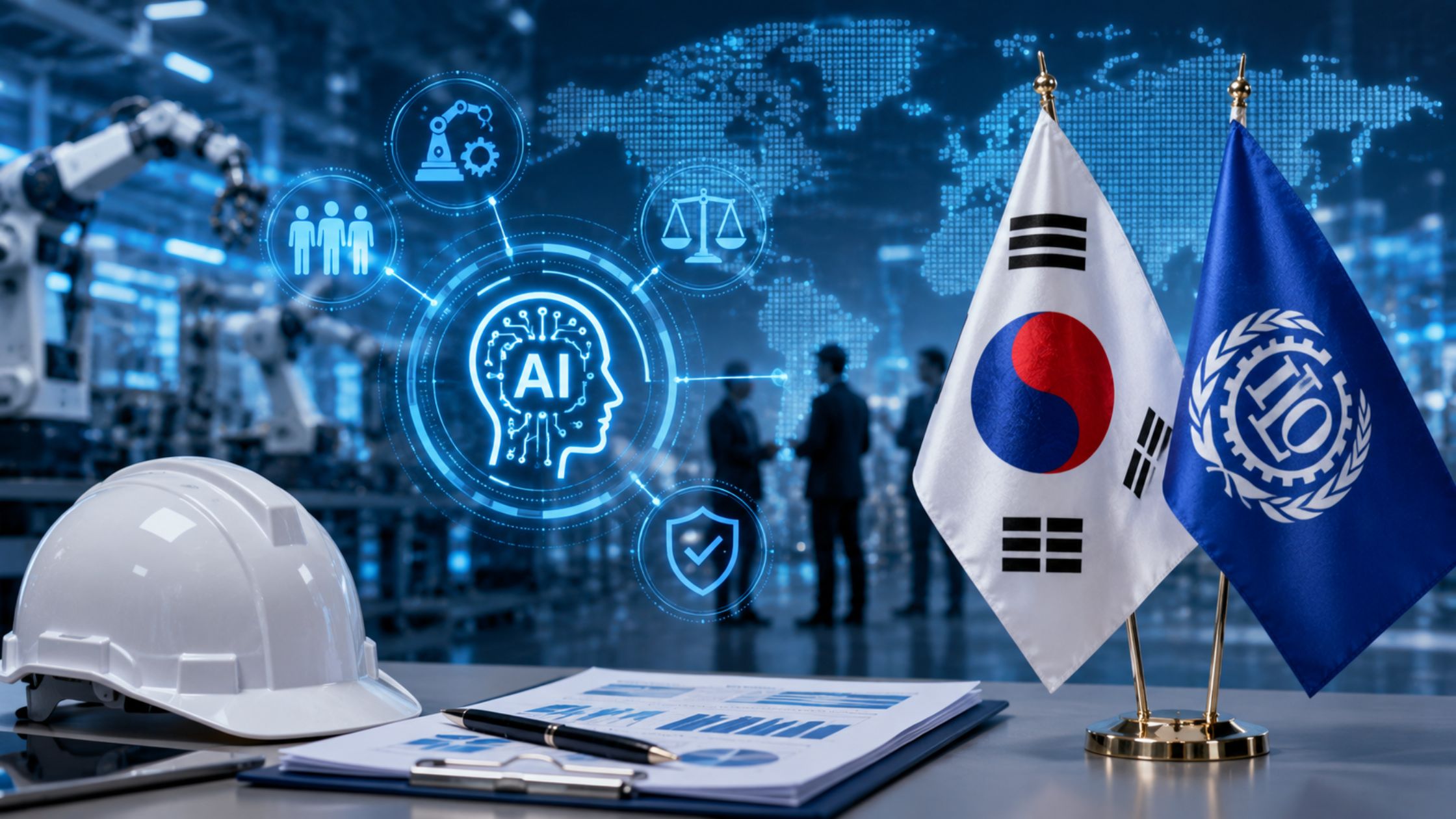
South Korean president highlights labor policy priorities as artificial intelligence reshapes industries, employment, and workplace structures.
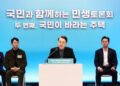
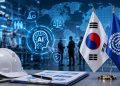
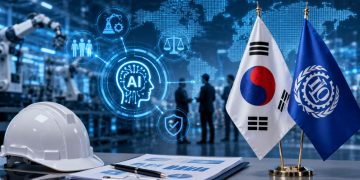
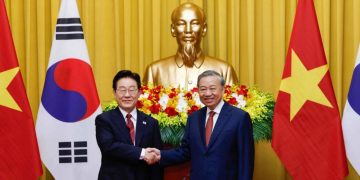
South Korean President Lee Jae Myung met with International Labor Organization (ILO) Director-General Gilbert Houngbo on Friday to discuss how governments can balance rapid advances in artificial intelligence with worker protections, as countries worldwide grapple with the growing impact of AI on labor markets.

According to South Korea’s presidential office, Lee and Houngbo exchanged views on labor policies in the AI era, workforce transformation, and cooperation between South Korea and the ILO to address future employment challenges.
The meeting comes as artificial intelligence increasingly moves from a tech-centric issue to a broader economic and social policy challenge. Governments face growing pressure to ensure that workers benefit from technological progress while maintaining global competitiveness.
During the talks, Lee introduced his administration’s labor policy priorities and emphasized the importance of preparing workers for structural changes driven by AI and digital transformation. The discussions also covered ways to strengthen cooperation between South Korea and the ILO on labor-related issues linked to emerging technologies.
The Intersection of Tech and Talent
The meeting highlights South Korea’s efforts to position itself as a leading AI economy while addressing concerns about how automation and advanced technologies could reshape employment across industries.
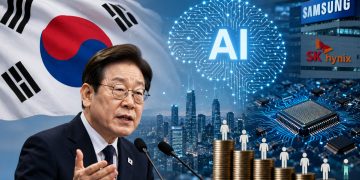
South Korea is home to some of the world’s largest technology and semiconductor companies, including Samsung Electronics and SK hynix, both of which have benefited from rising global demand for AI infrastructure, advanced memory chips, and data center technologies. As investment in AI accelerates, policymakers are increasingly focused on how technological gains will affect workers, wages, and long-term employment trends.
The issue has become particularly relevant as companies adopt AI tools and automation technologies across manufacturing, office work, logistics, and service industries. While AI is expected to improve productivity and create new business opportunities, labor experts have warned that rapid technological shifts could also disrupt existing jobs and widen economic inequality if governments fail to implement effective transition policies.
Tensions Over the AI Windfall
The meeting with the ILO comes at a time when labor issues are receiving heightened attention in South Korea’s technology sector.
Earlier this week, Samsung Electronics narrowly avoided a catastrophic labor strike after reaching a landmark tentative wage agreement with its largest labor union just hours before a scheduled walkout. The dispute, which union members officially ratified on Wednesday, underscored growing tensions over how workers should share in the benefits generated by South Korea’s AI-driven economic growth and semiconductor boom.
The labor discussion also follows a recent public debate surrounding the distribution of wealth generated by the AI economy. Earlier this month, comments by a senior presidential policy aide about potential “public dividends” tied to AI-driven economic gains sparked market volatility and prompted concerns among investors before the administration clarified that it was not considering the direct redistribution of corporate profits.
Together, these developments have drawn global attention to a broader question facing governments worldwide: how to ensure that the economic benefits of artificial intelligence are distributed fairly across society.
Looking Ahead
The ILO has become increasingly active in discussions surrounding AI and the future of work, warning that technological disruption could significantly reshape labor markets over the coming decade. The organization has urged governments, businesses, and labor groups to work together on policies focused on worker protections, reskilling programs, lifelong learning, and social safety nets.
For South Korea, those challenges are particularly significant as the country seeks to strengthen its position in global AI development while responding to acute demographic pressures, labor shortages, and changing workforce demands.
The presidential office stated that Lee and Houngbo also discussed future cooperation opportunities involving AI-related labor policy and international dialogue on emerging workplace challenges.
The meeting reflects a growing recognition among policymakers that artificial intelligence is no longer only a technology issue, but a labor, economic, and social issue that will increasingly shape government policy decisions in the years ahead. As countries compete to lead the next wave of AI innovation, South Korea appears to be placing greater emphasis on ensuring that worker protections and workforce adaptation remain central to the conversation alongside technological growth.