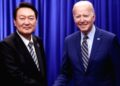

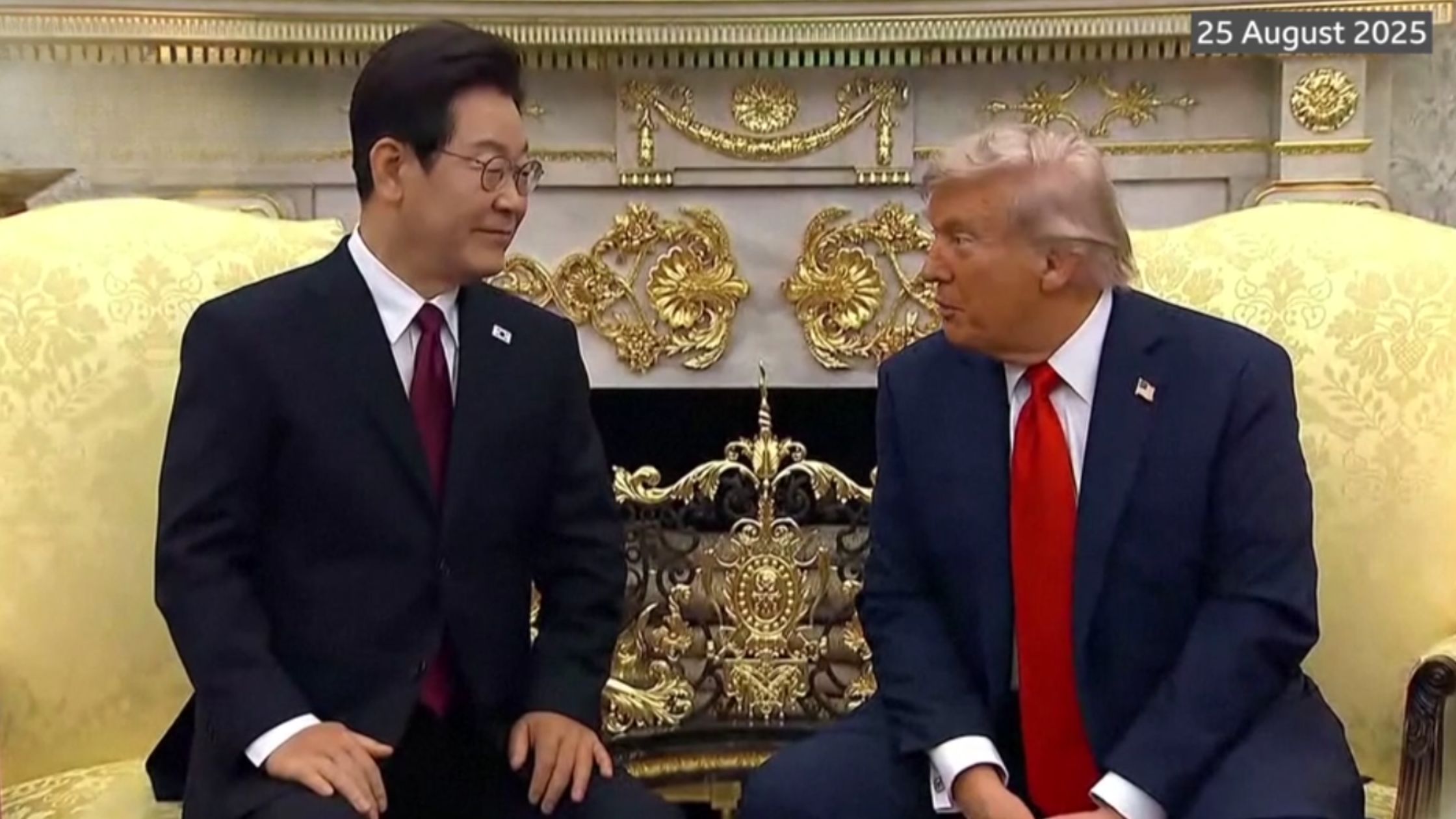
South Korean President Lee Jae-myung met U.S. President Donald Trump at the White House on Monday, where the two leaders renewed their commitment to the long-standing alliance. They vowed to deepen cooperation in areas including North Korea, security, and trade. Lee, who has promoted a policy of “pragmatic diplomacy” since taking office in June, said the talks marked the beginning of a new phase in the 72-year relationship between Seoul and Washington, one that prioritizes shared national interests.

The talks unfolded against an unusual backdrop. Just hours before the meeting, Trump posted on Truth Social, questioning turmoil in South Korea and alluding to last December’s failed martial law attempt by ousted leader Yoon Suk-yeol. Yet Lee managed to keep the focus on diplomacy, later telling a Washington audience that his approach aimed to “heal the wounds of division and war” while signaling openness to dialogue with North Korea’s Kim Jong Un.
The summit between President Lee and President Trump unfolded in a cordial atmosphere, with both leaders emphasizing common ground rather than points of friction. Lee described the meeting as the start of a “pragmatic alliance” built on national interests, while Trump praised him as a “great man and leader” in a handwritten note shared during a luncheon. Officials from Seoul later stressed that the session was meant to break the ice, framing the absence of a joint statement not as a failure but as a deliberate choice in line with today’s “new normal” diplomacy.
On trade, Trump assured reporters that South Korea would “make the deal they agreed to make,” calling it “the biggest deal they’ve ever made by far.” While no new terms were finalized, Lee indicated that the focus was on modernizing the alliance and making it more reciprocal. South Korea also expressed interest in joining America’s shipbuilding revival, with Trump suggesting that Korean expertise could help reestablish U.S. capacity in the industry.
North Korea dominated the conversation, with both leaders reaffirming their willingness to engage with Kim Jong Un. Trump repeated that he had a “very good” relationship with the North Korean leader and hinted that another meeting could happen as early as this year.
Lee urged Trump to act as a “peacemaker,” pledging that Seoul would support any renewed effort to reduce tensions on the Korean Peninsula.
The possibility of trilateral cooperation also came up. Trump highlighted the importance of working with Japan, noting that Prime Minister Shigeru Ishiba shared the same desire to address the North Korea issue. Lee, who had met Ishiba days earlier, said many obstacles between Seoul and Tokyo had already been removed, creating room for deeper three-way coordination with Washington.
Still, some sensitive issues surfaced. Trump floated the idea of the U.S. gaining ownership of land used by its military bases in South Korea, which currently host about 28,500 troops. He described it as a step beyond the existing lease arrangements, suggesting that Washington should “get rid of the lease and get ownership.” While Lee did not publicly oppose the proposal, his aides characterized the discussion as exploratory rather than binding.
Lee’s strategy throughout the meeting was to flatter Trump while avoiding confrontation. He praised the redesigned Oval Office, spoke warmly of Trump’s rapport with Kim Jong Un, and even joked about building a Trump Tower in North Korea to play golf. For Seoul’s delegation, the overriding goal was to prevent any diplomatic mishap or sharp rebuke, something that has embarrassed other foreign leaders in past White House visits.
The day underlined Lee’s balancing act as a liberal president navigating both domestic pressures and Trump’s unpredictable style. His government continues to pursue investigations into former President Yoon Suk-yeol over last year’s attempted martial law, a crisis that Trump himself alluded to in a Truth Social post just hours before the summit. But by the end of the visit, Lee had steered the discussion back to alliance-building and peace, ensuring his first trip to the White House ended without controversy and left open the possibility of deeper engagement with both Washington and Pyongyang.