



President says comments by policy chief Kim Yong-beom were misrepresented amid concerns over redistribution and market impact.
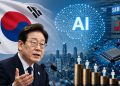
South Korean President Lee Jae Myung pushed back on Wednesday against media reports suggesting his administration was considering redistributing profits from major artificial intelligence companies to the public. Lee labeled the claims “malicious fake news” and accused several outlets of distorting remarks made by a senior policy aide.

The controversy emerged after Kim Yong-beom, Lee’s chief presidential secretary for policy, proposed discussing a potential “public dividend” system tied to the economic gains generated by South Korea’s rapidly expanding AI industry. His remarks sparked an intense political debate and spooked investors, raising concerns over potential government intervention in the country’s core technology sector.
In a post on X, Lee stated that media organizations had edited Kim’s comments to falsely suggest the government was considering distributing corporate profits from AI companies directly to citizens. According to Lee, Kim was actually referring to the possibility of sharing surplus tax revenues generated by AI-driven economic growth.
“What Director Kim Yong-beom discussed was a review of distributing excess tax revenue generated from surplus profits in the AI sector,” Lee wrote, arguing that reports mischaracterized the proposal and fueled unnecessary panic.
The Roots of the Debate
The dispute highlights a broader structural issue emerging in South Korea and other major economies. As artificial intelligence reshapes industries and boosts corporate profits, it heavily concentrates economic gains within a small handful of dominant infrastructure companies.
In a series of social media posts earlier this week, Kim argued that the benefits created during the “AI infrastructure era” were not solely the result of private enterprises. Instead, he noted, they were built on decades of public investment, education, industrial policy, and national infrastructure. He suggested that policymakers should explore mechanisms to ensure that a portion of these AI-generated economic gains is shared more broadly across society.
However, his comments triggered an immediate backlash from opposition politicians and market participants, many of whom interpreted the proposal as a heavy-handed push toward wealth redistribution or an impending financial burden on highly profitable technology firms.
Market Volatility and Official Clarification
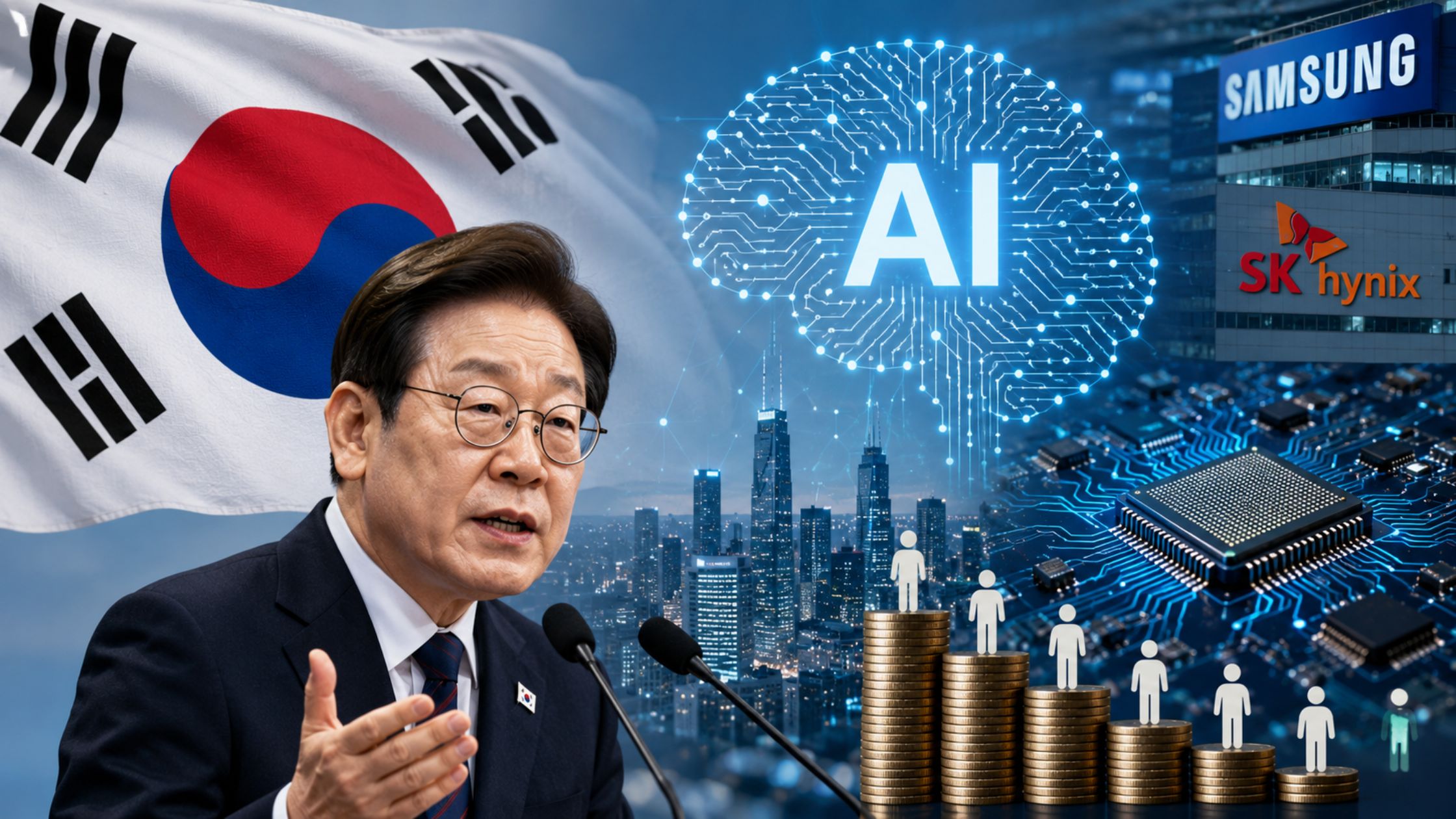
The issue remains highly sensitive in South Korea, where semiconductor giants like Samsung Electronics and SK Hynix have become the primary beneficiaries of the global AI boom. Surging demand for advanced high-bandwidth memory chips used in AI servers has exponentially strengthened earnings expectations across the semiconductor sector, anchoring South Korea’s position in the global tech supply chain.
Investor anxieties over Kim’s remarks contributed to sudden volatility in the South Korean stock market. Traders rushed to determine whether the administration was signaling a drastic policy shift regarding corporate profits, causing the KOSPI index to slide as foreign investors temporarily pulled back on major tech holdings.
The presidential office later formally clarified the situation, stating that Kim’s comments reflected his personal academic views rather than an official, finalized government policy proposal.
Despite the damage control, the episode has thrust a critical global policy question into the spotlight: how governments should manage the staggering wealth created by artificial intelligence. As AI technologies become central to macroeconomics, policymakers worldwide are wrestling with how to balance corporate competitiveness and aggressive innovation with tax policy and social welfare.
While Lee’s administration has firmly denied any plans to seize or directly redistribute corporate profits, the controversy indicates that public debates over who precisely benefits from the AI boom will remain a central fixture of South Korea’s political landscape.