







Last week, President Yoon deemed universities in South Korea as “cartels of suppliers” with vested interests, while emphatically declaring universities that innovate should be government funded, and those that fail to do so should fail. The writer could not agree more; however, is it a reality within the Korean university system’s entrenched vested interests? Do President Yoon’s proposed reforms adequately address the extent of the changes required to reform the system genuinely?

The university community is acutely aware that universities in South Korea have experienced an unexpected decline in rankings over the past decade, despite Korea’s significant increase in educational spending relative to other OECD countries. Seoul National University (SNU), considered Korea’s premier university, has particularly witnessed this decline. Fifteen years ago, it was among the top 50 global universities, but its most recent ranking, according to US News & World Report, places it at 129.
To add insult to injury, Korea’s higher education system has experienced an accelerated regression despite Korea’s ascent to become the 11th largest economy in the world. The decline is particularly disheartening, considering Korea’s global leadership in renowned corporations such as Samsung, Hyundai, and others.
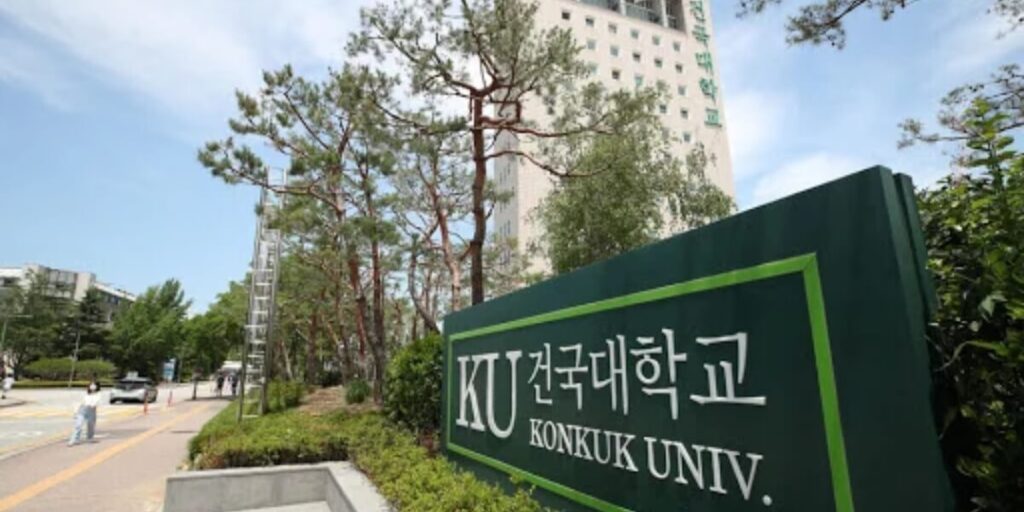
While Konkuk University may not be considered a top-tier institution, having spent 15 years there as a professor, I personally witnessed a multitude of shortcomings and inefficiencies that are unfortunately prevalent in many other universities in South Korea as well.
To begin with, the prevailing practice in universities of primarily hiring academics from within the same institution is likely one of the most counterproductive and inhibiting practices when it comes to fostering student innovation and creativity.
At most universities in South Korea, there is an implicit practice of maintaining a 100 percent graduation rate, regardless of a student’s performance.
If a professor assigns a failing grade to a student due to underperformance, the student can retaliate by submitting a negative evaluation of the professor. In other words, when graduate student applicants receive acceptance at a university, they are assured of obtaining a Ph.D., regardless of their capabilities.
Furthermore, it is common for senior faculty members to facilitate hiring their own graduate students, even if these students may lack the necessary intellectual capacity for effectively educating undergraduate and graduate students alike.
Regrettably, a significant number of these Ph.D. holders lack proficient English speaking and writing skills, which hinders their ability to participate in international collaborative projects and publish in international journals.
Instead, these in-house academics are often restricted to publishing their work in Korean journals, where they typically produce 2-3 articles a year. Furthermore, the approval for publication is often facilitated by their close affiliations with the editors, with whom they tend to maintain a fraternal relationship.
This “vicious cycle” is further aggravated by unspoken policies that limit the hiring of accomplished foreign faculty members and restrict the granting of tenure to those who are hired. Recently, reputable publications such as JoongAng Ilbo and others have either removed or reduced the significance of foreign faculty as a metric for university rankings. Consequently, many Korean universities have narrow-sighted prioritized the replacement of faculty members with individuals affiliated with the institution.
As a rhetorical question, is it conceivable to imagine a scenario where a prestigious institution like MIT, or even a lower tier university like North Dakota State for that matter, exclusively hires internally or limits their candidates to only those born in the United States?
The dysfunctional operation of the university apparatus between departments and administration.
In general, Korean university administrations adopt a “hands-off” approach regarding department hiring processes. Their primary role is to validate and conduct due diligence on the candidate’s academic background, essentially ensuring the candidate graduated from an accredited university.
Consequently, a culture characterized by a lack of accountability and the presence of moral hazard is pervasive in numerous universities.
Lacking any form of oversight, departments have complete autonomy in managing their departments and determining how they instruct students.
I have personally witnessed instances where faculty members would miss a significant portion of their lectures and unabashedly take extended leaves abroad during the semester.
Throughout this time, there is a noticeable lack of concern about termination or dismissals among the faculty, as Korean academics face little risk of termination unless they engage in cases of sexual harassment towards students or fellow faculty members.
The toxic culture within Korean academia severely hampers innovation.

When comparing SNU to renowned global institutions, such as Stanford, it becomes apparent that while SNU has been successful in producing startup founders who contribute to the Korean startup ecosystem, it has had limited success in generating globally renowned startup spin-offs. In contrast, leading computer science and engineering departments like Stanford have been responsible for notable spin-offs such as Google and Cisco, among others.
Over the years, Seoul National University (SNU) has consistently secured more than twice the number of patents as Stanford University and other prestigious institutions. However, the commonly cited principle of “quality before quantity” holds true in this case, as only a few companies actually make use of SNU’s intellectual property. In contrast, Stanford’s leading entity, Alphabet, handles over 8.5 billion searches daily.
To put it succinctly, the culture within Korean universities acts as a deterrent to groundbreaking research and development (R&D).
Firstly, there is a limited allocation of funds for research and development (R&D), as most universities prioritize external appearances and beautification. While some Korean universities may have impressive exteriors resembling ornate and palatial structures, they often lack substantial progress and contributions in terms of R&D.
Furthermore, the top-down approach to research within Korean universities stifles creativity, leading to a counterproductive environment where graduate students and researchers are discouraged from challenging faculty members and suggesting modifications that could potentially enhance the outcomes of their research.
While drawing a direct comparison to Stanford may be extreme and possibly misleading, the underlying point remains: universities in South Korea have never aimed to become globally recognized as cutting-edge institutions, and currently, they lack aspirations to achieve such a status.
President Yoon’s incremental reforms are disproportionate to the immense challenge of reforming higher education.
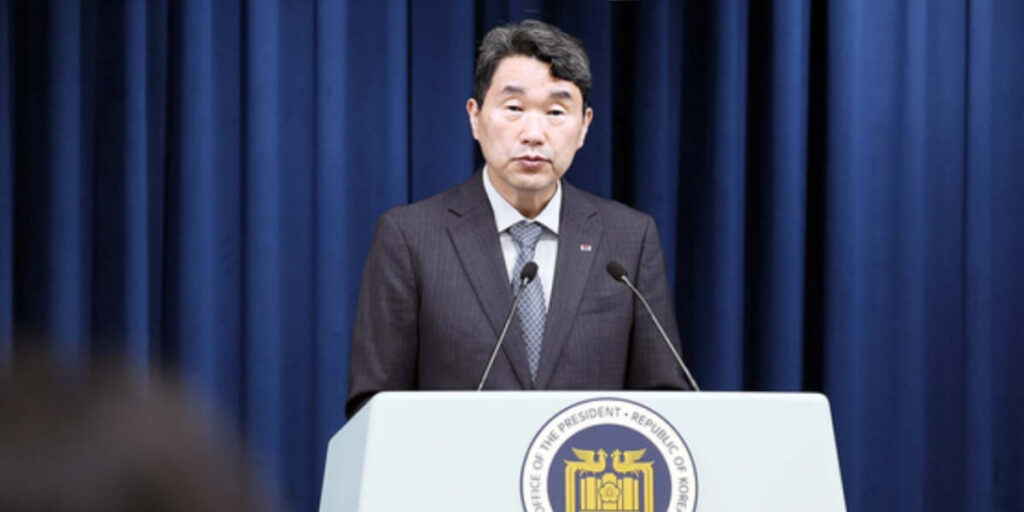
The Yoon administration stated last week that in the next four years, the South Korean Education Ministry plans to select 30 universities located outside the Seoul metropolitan area, including Seoul, Incheon, and Gyeonggi, to receive funding from a 3 trillion won support budget. These universities will be chosen based on their innovative plans and potential to foster growth in the semiconductor industry.
The selected universities or coalitions will be required to produce at least 50 undergraduate-level semiconductor graduates annually as part of the funding agreement. The aim is to address the increasing demand for skilled professionals in the semiconductor field.
The designated universities will utilize the allocated budget to develop specialized semiconductor curricula, create educational programs, and provide necessary resources for research and development activities.
By focusing on universities located outside the Seoul metropolitan area, the government intends to promote regional development and reduce the concentration of technology and innovation in the capital region. This initiative will provide opportunities for students and professionals in different parts of the country to contribute to the semiconductor industry and drive economic growth in their respective regions.
By 2026, it is expected that the selected universities will have made significant strides in establishing robust semiconductor programs, producing well-trained graduates, and contributing to South Korea’s semiconductor industry’s overall progress.
While the proposed innovation reforms are commendable, they raise valid questions about how they will effectively address the broader issues plaguing higher education. Specifically, there are concerns regarding the transformation of non-semiconductor curricula for a significant number of students. Additionally, the question arises about the majority of universities in South Korea that are not designated as innovative and may not benefit from the reforms.
To be direct, President Yoon’s policy fails to mention any specific measures for reforming higher education. This omission suggests that his policy does not genuinely address the prevalent toxic culture and lack of innovation within higher education.
In essence, President Yoon’s reforms, as they stand, can be regarded as mere lip service without substantial implementation or tangible impact.
More to read:
The Diplomatic Dispute between China and South Korea has Unfolded in Unique Circumstances