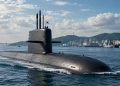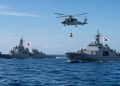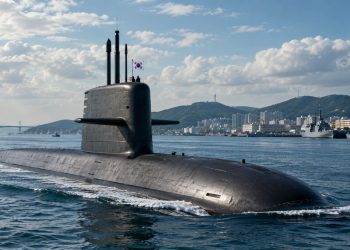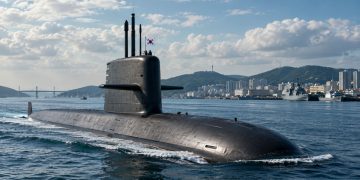





Seoul aims to launch its first nuclear-powered submarine by the mid-2030s as it seeks stronger deterrence against North Korea and expands defense capabilities.
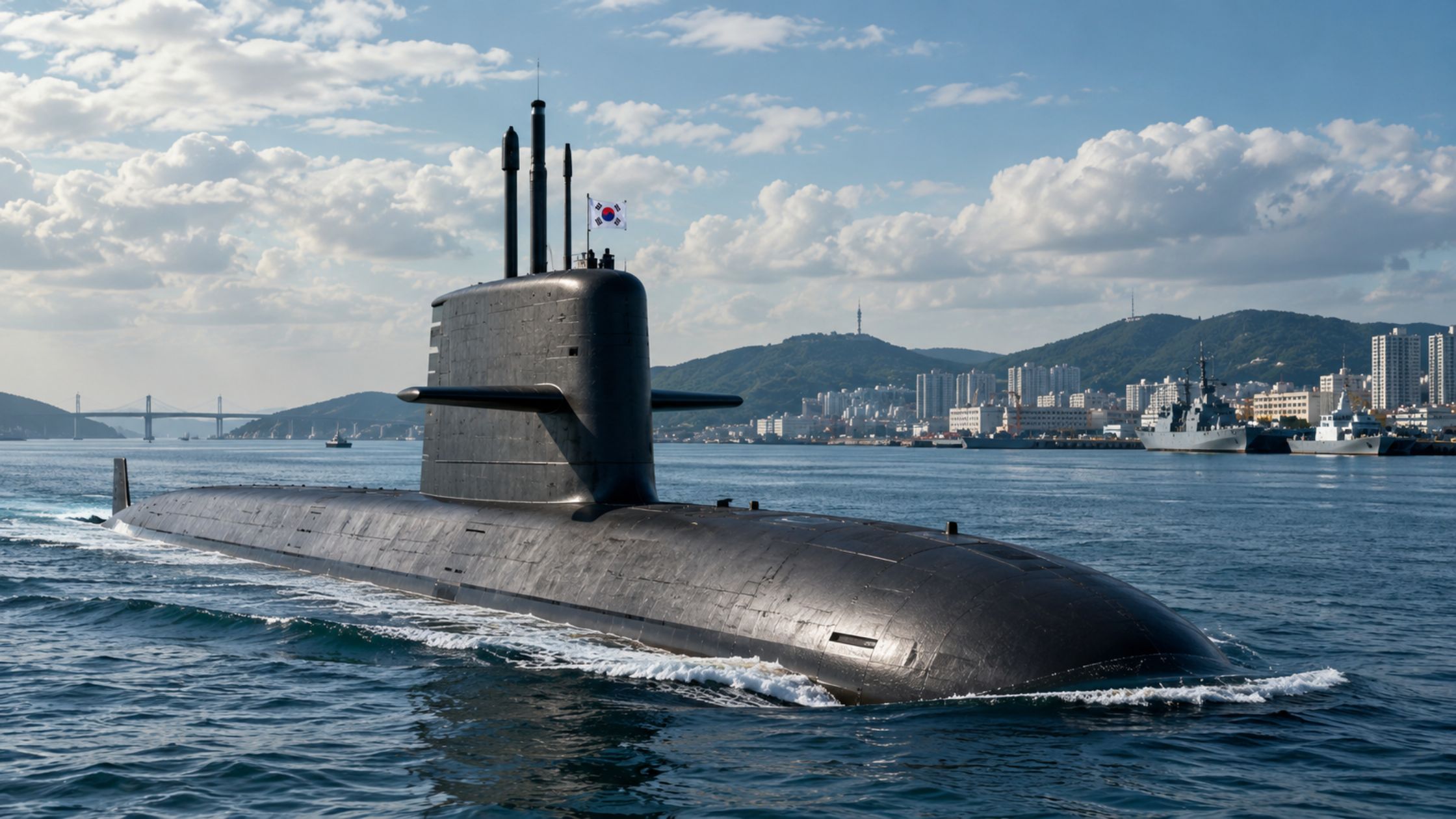
South Korea has unveiled plans to develop and launch its first nuclear-powered submarine by the mid-2030s. The move marks one of the country’s most ambitious defense modernization projects as security concerns continue to mount on the Korean Peninsula and across the wider region.

The roadmap was formally announced during the inaugural session of the Future National Security Committee at a naval base in Jinhae. Attended by President Lee Jae Myung, Defense Minister Ahn Gyu-back outlined the “Basic Plan for the Development of Nuclear-Powered Submarines”—officially designated the Jang Bogo N Project—designed to strengthen South Korea’s ability to respond to evolving military threats.
According to the government, the submarines will be developed and constructed entirely within the Republic of Korea, utilizing domestic reactor and hull-design technologies. The vessels will run on low-enriched uranium fuel, with Seoul working closely with the United States and international regulatory bodies to ensure strict compliance with global non-proliferation commitments. Officials stated that the goal is to launch the first vessel by the mid-2030s, with operational deployment scheduled for the late 2030s.
A Strategic Shift in Naval Doctrine
The project represents a major shift in South Korea’s naval strategy and reflects deep concerns over North Korea’s efforts to expand its submarine-launched ballistic missile (SLBM) and tactical nuclear capabilities.
President Lee praised the program as “a symbol of our commitment to self-reliant defense,” stating that the fleet will underscore South Korea’s determination to take direct responsibility for peace and security on the peninsula. Analysts note that establishing a self-reliant defense framework also serves as a crucial stepping stone toward Seoul reclaiming wartime operational control (Opcon) from the United States.
Unlike conventional diesel-electric submarines, which must surface or snorkel frequently to recharge their batteries, nuclear-powered submarines can remain submerged for months at a time. This gives the Republic of Korea Navy (ROKN) a distinct edge in high mobility, endurance, and stealth. Military analysts view nuclear propulsion as a critical asset for establishing an “underwater kill chain” capable of secretly tracking and neutralizing North Korean naval activities before weapons can be launched.
Industrial Fallout and Allied Cooperation
The multi-decade initiative—estimated to span over 40 years across construction and operation cycles—is expected to inject massive momentum into South Korea’s engineering, nuclear, and shipbuilding sectors, creating more than 40,000 high-quality jobs.
Investors responded enthusiastically to the news. Shares of major domestic shipbuilders, including Hanwha Ocean and HD Hyundai Heavy Industries, rose sharply following the announcement, as market analysts expect both defense giants to play central roles in constructing the future fleet.
The project also highlights a highly significant evolution in U.S.–South Korea defense cooperation. While Washington has historically maintained strict non-proliferation boundaries regarding foreign naval nuclear propulsion, recent structural agreements between President Lee and U.S. leadership have cleared a path for Seoul to secure the necessary low-enriched uranium fuel from the United States.
Official Stance on Non-Proliferation: South Korean officials explicitly reiterated that the Jang Bogo N Project focuses entirely on conventionally armed vessels and is completely unrelated to strategic nuclear weapons. The government plans to build a transparent safeguard infrastructure alongside the International Atomic Energy Agency (IAEA) to manage all fissile materials and radioactive waste safely.
As geopolitical competition intensifies across Asia over maritime boundaries and underwater military capabilities, South Korea’s entry into the elite group of nations operating nuclear-powered submarines will undoubtedly reshape the region’s strategic deterrence balance for decades to come.