



Graduate student faces treason-related charges as investigators examine security and diplomatic fallout
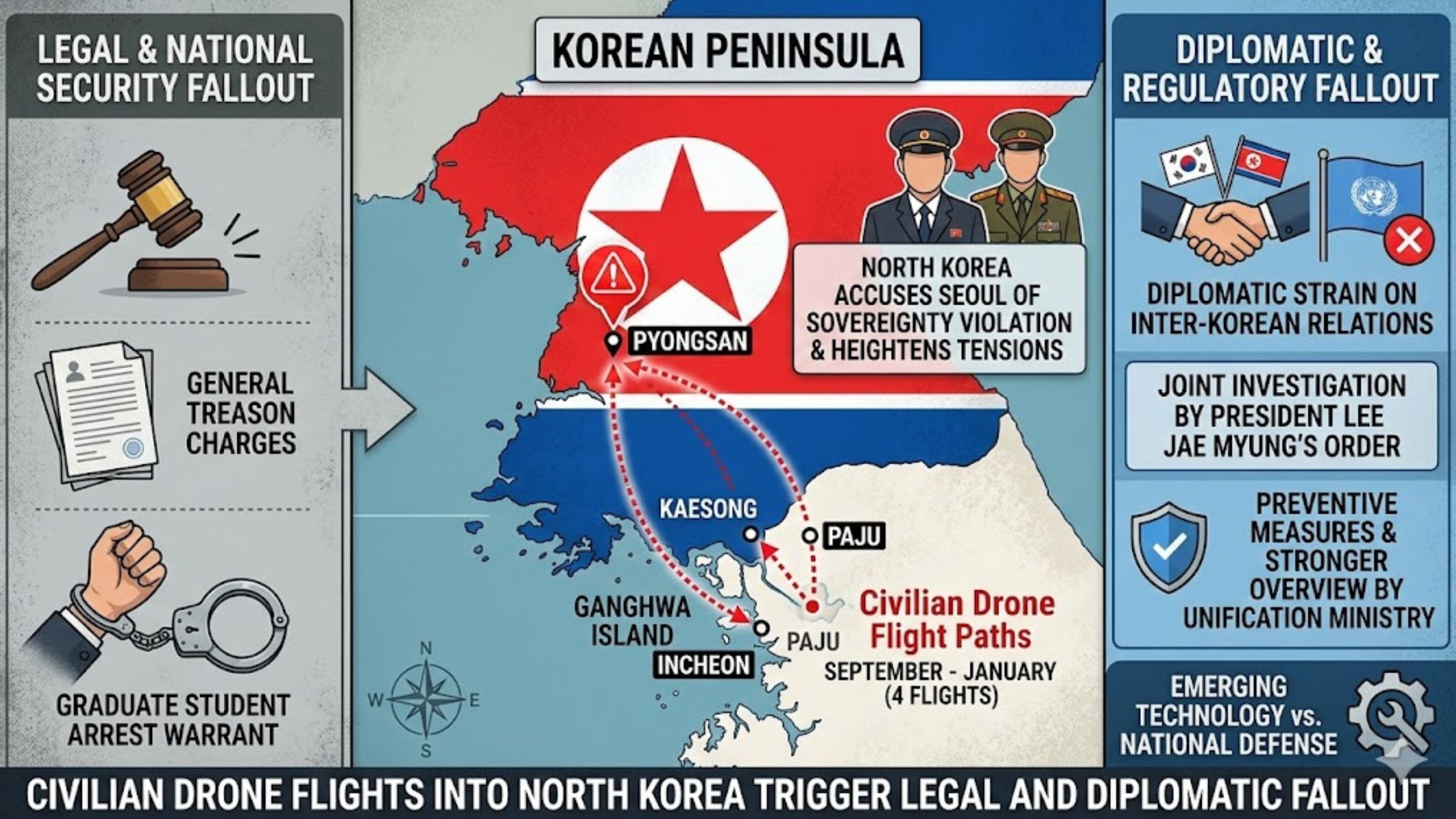
A South Korean court has issued an arrest warrant for a graduate student accused of flying drones into North Korea, in a case that has raised concerns about national security, civil-military oversight and inter-Korean relations. The suspect, surnamed Oh and in his 30s, appeared before the Seoul Central District Court for a warrant hearing on charges including general treason, benefiting the enemy, and violations of aviation safety and military installation laws.

Presiding Judge Bong-dusik approved the warrant, citing the risk of evidence destruction and flight. Prosecutors argue that Oh launched unmanned aerial vehicles across the border on four occasions between September and January. During the hearing, Oh denied the main allegations, disputing claims that his actions harmed South Korea’s military interests or were coordinated with state bodies.
According to a joint military-police task force, the drones were sent from Ganghwa Island in Incheon and programmed to pass through Kaesong and Pyeongsan in North Korea before returning to Paju near the border. Investigators say the flights may have exposed sensitive military-related information and endangered public safety.
Authorities further contend that the operations heightened tensions on the Korean Peninsula. North Korea publicly accused Seoul of violating its sovereignty following reported drone incursions in September and January, bringing diplomatic attention to the matter.
The charge of benefiting the enemy under South Korean law can apply not only to direct assistance to a hostile state but also to actions that damage one’s own military interests. Prosecutors argue that by triggering tensions and potentially revealing operational data, the suspect’s actions fall within that scope.
Motive and Disputed Intent
Investigators believe the flights were conducted to test drone performance for business purposes. Oh is reported to operate a drone-related enterprise and is accused of seeking economic gain through cross-border trials.
In court, however, Oh denied acting under instructions from military or intelligence officials. In a prior media interview, he said the flights were intended to verify possible radioactive contamination near a uranium facility in Pyeongsan. His defence appears aimed at challenging the assertion that he acted with intent to aid an adversary or harm national security.
Wider Investigation and Political Context
The task force is examining the roles of six additional individuals, including those allegedly involved in manufacturing the drones and certain military and intelligence personnel. Oh is the first suspect for whom physical detention has been sought.
President Lee Jae Myung has ordered a comprehensive joint investigation following reports of civilian involvement in the operations. The Unification Ministry has also announced preventive measures to avoid similar incidents, reflecting concern over the diplomatic and security implications.
The case sits at the intersection of emerging drone technology, private enterprise and national defence. It also highlights how civilian technological capabilities can intersect with sensitive border areas, raising questions about regulatory oversight and enforcement. As the investigation continues, the courts will need to determine whether the alleged actions meet the high legal threshold for treason-related offences or represent serious but distinct violations of aviation and security laws.