




South Korea seeks closer ASEAN ties and joint action on transnational crimes ahead of a key diplomatic week
President Lee Jae Myung left for Malaysia on Sunday to take part in the Association of Southeast Asian Nations (ASEAN) Summit, aiming to deepen South Korea’s ties with the regional bloc and boost joint efforts to tackle cross-border challenges, including online fraud and cybercrime.

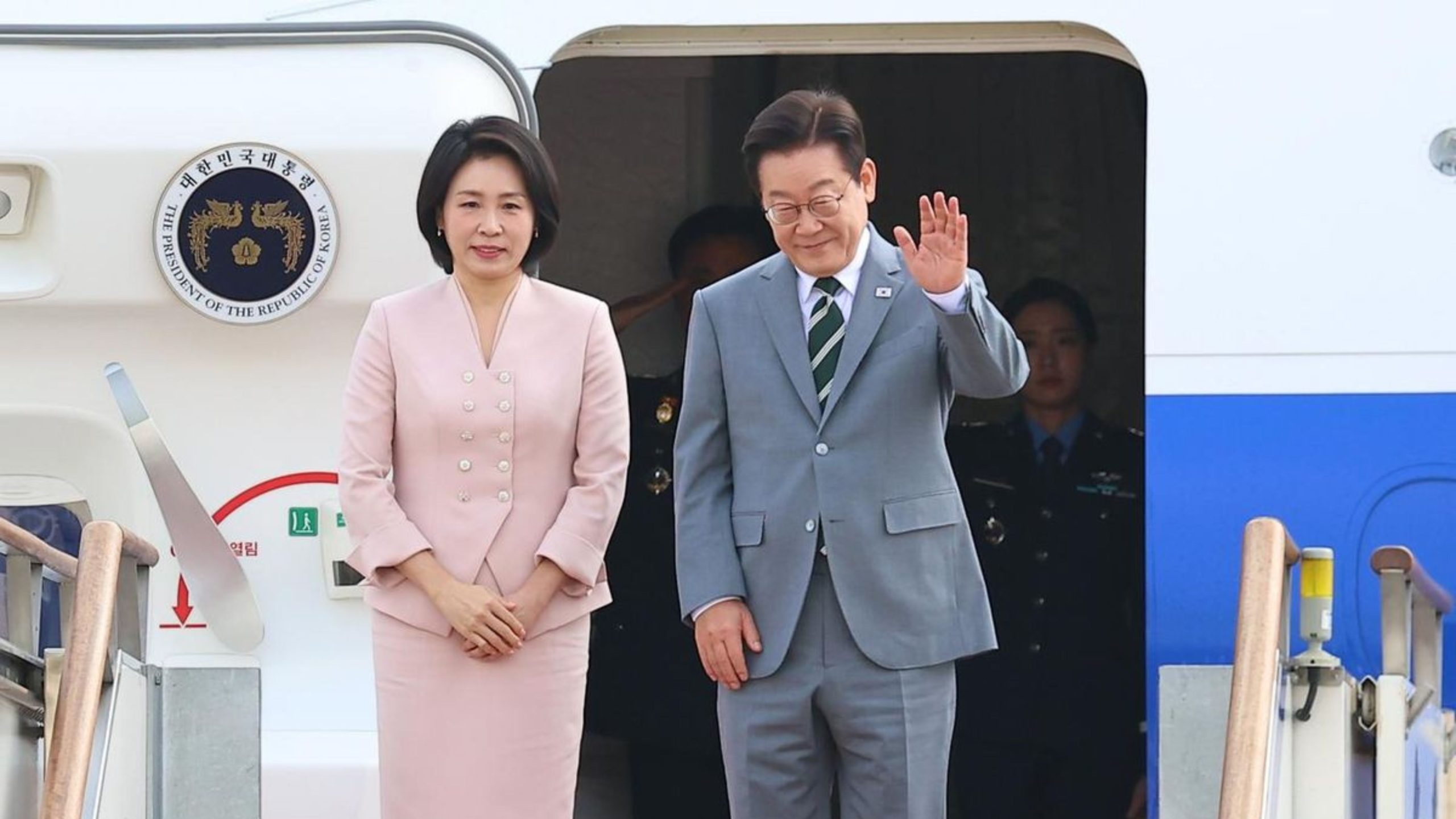
The two-day visit to Kuala Lumpur marks President Lee’s first trip to Southeast Asia since taking office in June. Accompanied by First Lady Kim Hye-kyung, Lee left Seoul Air Base aboard Air Force One, with senior officials—including Chief of Staff Kang Hoon-sik, Democratic Party leader Jung Chung-rae, and Interior Minister Yun Ho-jung—present to see him off. During his stay, the president is also expected to meet members of the Korean community in Malaysia before returning home to prepare for the upcoming APEC Summit in Gyeongju.
Expanding Strategic Cooperation with ASEAN
On Monday, President Lee will attend the ASEAN Summit, where he plans to outline South Korea’s vision for advancing its Comprehensive Strategic Partnership with the 10-member bloc. National Security Adviser Wi Sung-lac said Lee will present proposals for deeper collaboration in emerging technologies such as artificial intelligence and cybersecurity. He is also expected to seek ASEAN’s support for his peace initiative on the Korean Peninsula, which emphasizes dialogue and economic cooperation as key tools for maintaining regional stability.
Lee’s agenda reflects Seoul’s ongoing efforts to position South Korea as a central partner for ASEAN in digital innovation and security cooperation. Analysts say the president’s approach signals continuity with previous administrations’ focus on Southeast Asia as a strategic counterpart for diversification and economic growth amid intensifying U.S.-China competition.
Meetings with Regional Leaders
Lee will later take part in the ASEAN Plus Three Summit involving South Korea, Japan, and China, aimed at fostering multilateral cooperation in areas such as supply chain resilience, green energy, and regional security. The event will also mark Lee’s first in-person meetings with Japanese Prime Minister Sanae Takaichi and Chinese Premier Li Qiang, encounters that are expected to draw significant diplomatic attention.
Observers view these meetings as an early test of President Lee’s regional diplomacy, particularly as Seoul works to balance relations with both Tokyo and Beijing while maintaining its alliance with Washington. The trilateral engagement underscores South Korea’s intent to play a constructive role in maintaining stability in Northeast and Southeast Asia.
Addressing Cybercrime and Bilateral Issues
On the sidelines of the summit, President Lee will hold a separate meeting with Cambodian Prime Minister Hun Manet to discuss bilateral cooperation on tackling online scam networks and protecting South Korean nationals. The issue gained prominence following the recent death of a South Korean student in Cambodia, allegedly linked to a fraudulent job recruitment scheme. Both leaders are expected to explore closer coordination between law enforcement agencies and preventive measures to curb transnational fraud targeting Korean citizens abroad.
In the afternoon, Lee is also scheduled to meet Malaysian Prime Minister Anwar Ibrahim to discuss expanding economic and strategic cooperation. The discussions are likely to cover trade, investment, infrastructure, and defense, with a focus on advancing the “Korea-ASEAN Solidarity Initiative” — Seoul’s framework for enhancing engagement with Southeast Asia across key growth sectors.
Setting the Stage for APEC and Broader Diplomacy
President Lee’s visit to Malaysia comes at the start of a crucial diplomatic week for South Korea. Following the ASEAN meetings, the country will host the Asia-Pacific Economic Cooperation (APEC) Summit in Gyeongju, drawing global attention as U.S. President Donald Trump and Chinese President Xi Jinping are expected to meet amid ongoing trade tensions. Seoul aims to leverage the APEC platform to showcase its leadership in fostering dialogue between major powers and promoting inclusive regional cooperation.
The presidential office confirmed that Lee will hold his second bilateral meeting with President Trump on Wednesday and his first with President Xi on Saturday, both leaders visiting South Korea as part of their participation in the summit. The back-to-back engagements highlight South Korea’s growing diplomatic role as it navigates a complex global environment shaped by economic competition, digital transformation, and shifting power dynamics.
Outlook: Southeast Asia as a Diplomatic Priority
For President Lee, the ASEAN Summit serves as both a diplomatic debut in Southeast Asia and a strategic prelude to broader engagements at APEC. His focus on digital cooperation, regional security, and crime prevention aligns with South Korea’s broader goal of deepening its role as a reliable and innovative partner in the Indo-Pacific region.
While the meetings in Kuala Lumpur are expected to emphasize shared interests and long-term collaboration, analysts say the real test will lie in how effectively South Korea can translate its diplomatic outreach into sustained regional influence. As Seoul prepares to host world leaders later this week, Lee’s back-to-back summits mark a defining moment for his administration’s foreign policy agenda.