





Persistent capacity strain forces reliance on parole as structural challenges in the correctional system deepen
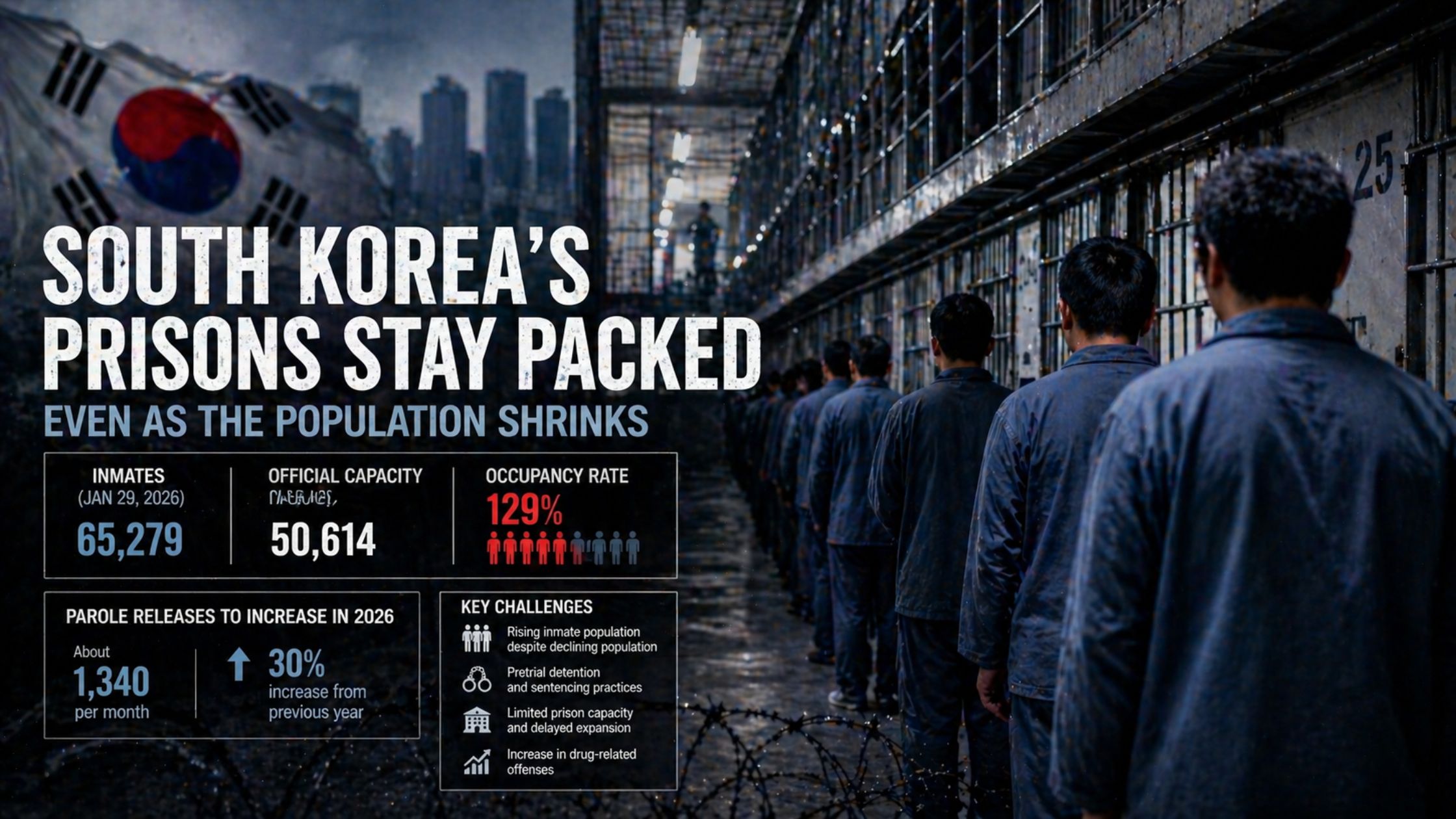
South Korea’s prison system continues to operate well beyond its intended capacity, highlighting a structural imbalance that persists even as the country’s overall population declines. Recent data indicate that correctional facilities are housing tens of thousands more inmates than they were designed to accommodate, placing sustained pressure on infrastructure, staffing and inmate conditions.

As of early 2026, the number of inmates held nationwide significantly exceeded official capacity, with occupancy levels estimated at around 130 percent. While exact figures vary across reports, the trend is consistent: overcrowding remains entrenched across much of the system. The issue is particularly visible in detention centers, where individuals awaiting trial or sentencing are held. Some facilities have reported conditions severe enough to require transferring detainees to prisons due to lack of space, blurring the line between pretrial and post-conviction confinement.
What makes the situation notable is the contrast with South Korea’s broader demographic trajectory. The country’s population has begun to decline, yet the number of incarcerated individuals has not followed the same pattern. This divergence suggests that overcrowding is not driven by population growth, but by how the criminal justice system processes cases. Pretrial detention practices, sentencing patterns and limited expansion of correctional infrastructure have combined to create a bottleneck.
Short-Term Relief Measures
In response, the government has turned to administrative measures to ease immediate pressure. The Ministry of Justice has increased the number of inmates released on parole, framing the move as a practical adjustment rather than a shift in criminal policy. While expanded parole can provide temporary relief, it does little to address underlying capacity constraints. As a result, the system remains reliant on periodic adjustments rather than long-term structural reform.
Shifts in crime trends have also contributed to the strain. Reports point to a rise in certain categories of offenses, including drug-related cases, which often involve longer investigative processes and repeated detention. The increase in such cases has added a steady flow of inmates into the system, complicating efforts to stabilize overall numbers.
Efforts to expand correctional facilities have lagged behind demand, leaving existing institutions to absorb rising inmate populations. Construction delays and limited space for new facilities have further constrained the system’s ability to adapt. At the same time, policy choices continue to shape demand. Strong public expectations around law enforcement and accountability can translate into higher incarceration rates, even as capacity remains fixed.
A Long-Term Challenge
Overcrowding carries consequences beyond space limitations. It can strain prison staff, increase safety risks, and limit access to rehabilitation programs, ultimately affecting both inmates and the broader justice system.
The current situation reflects a deeper tension between enforcement priorities and institutional capacity. Without adjustments on both sides of that equation, overcrowding is likely to persist.
For now, South Korea appears to be managing the issue through incremental measures rather than comprehensive reform. However, the mismatch between capacity and demand suggests that a more structural response may eventually be required.
Even as the population declines, the prison system tells a different story—one shaped less by demographics and more by policy, enforcement patterns and the pace of institutional change.