





Ruling underscores limits of online performance as authorities push back against disruptive content in public spaces
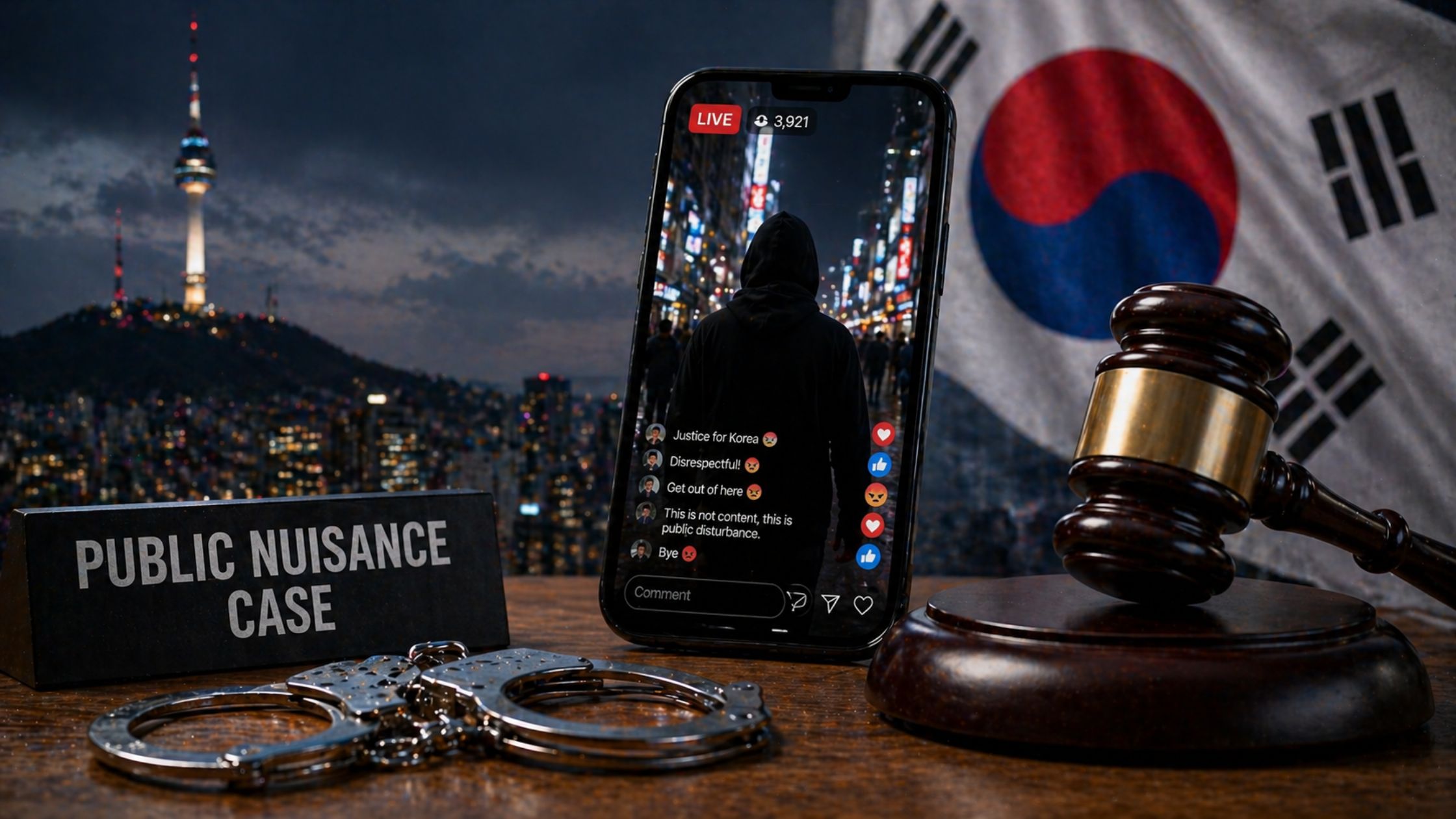
A court in Seoul has sentenced American YouTuber Johnny Somali to six months in prison, concluding a high-profile case that has drawn attention to how far online content creation can extend into real-world consequences.

The Seoul Western District Court delivered its ruling in mid-April, ordering immediate detention after finding the defendant guilty of public nuisance and related offenses. Prosecutors argued that his actions were not isolated incidents but part of a pattern of behavior designed to attract attention and generate online revenue through provocation.
The case gained traction following a widely circulated video in 2024 that showed Somali interacting inappropriately with a memorial linked to victims of wartime sexual slavery. The incident triggered strong public backlash, with many viewing the act as deeply disrespectful to historical memory.
Although the YouTuber later issued an apology, saying he had not understood the significance of the site, the controversy marked the beginning of a series of incidents that brought him under increasing scrutiny.
Authorities say he continued to engage in disruptive conduct in public spaces, despite warnings. These actions, which included provocative stunts and confrontational behavior, led to repeated complaints and ultimately formed the basis of the prosecution’s case.
Court Weighs Impact Over Intent
While prosecutors had sought a longer sentence, the court opted for six months, noting the absence of serious physical harm. At the same time, it emphasized that the conduct had caused public disturbance and undermined social order.
The ruling also included additional penalties, reflecting concerns about the broader impact of the behavior rather than any single incident.
Legal observers say the decision reflects a growing willingness by South Korean courts to treat online-driven misconduct as a matter of public accountability when it spills into shared spaces.
A Test Case for Online Content Culture
Beyond the individual case, the ruling speaks to a wider shift in how authorities are approaching disruptive online content. Livestreaming and “prank” formats have expanded globally, often blurring the line between entertainment and harassment.
In South Korea, however, tolerance for such behavior appears limited when it intersects with sensitive social or historical issues. The Somali case became a focal point for that boundary, raising questions about how far creators can go in pursuit of visibility.
The case also highlights a broader tension between freedom of expression and the protection of public order. While online platforms encourage experimentation and boundary-pushing content, local laws continue to govern behavior in physical spaces.
For South Korean authorities, the message appears clear: actions that disrupt daily life or offend widely held social norms may be treated as legal violations, regardless of whether they are framed as content creation.
A Signal Beyond the Case
The outcome may carry implications beyond South Korea. As digital creators increasingly travel and produce content across borders, differences in cultural expectations and legal standards are becoming more visible.
In this instance, a strategy built around provocation encountered a legal environment with little tolerance for disruption tied to public spaces and historical sensitivities.
With the sentence now delivered, the case closes a chapter that began with viral content and escalated into a national debate. It also leaves behind a clearer precedent: online visibility does not shield individuals from legal consequences when their actions cross into public harm.
For South Korea, the ruling reinforces a position that is likely to shape future cases involving both domestic and foreign creators. The boundary between digital expression and real-world accountability, the court has signaled, remains firmly enforced.