



South Korea’s new leader pledges to serve as “a president for all” while navigating domestic reform, U.S. visa tensions, and challenges with North Korea.
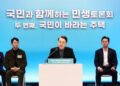
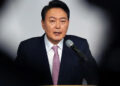
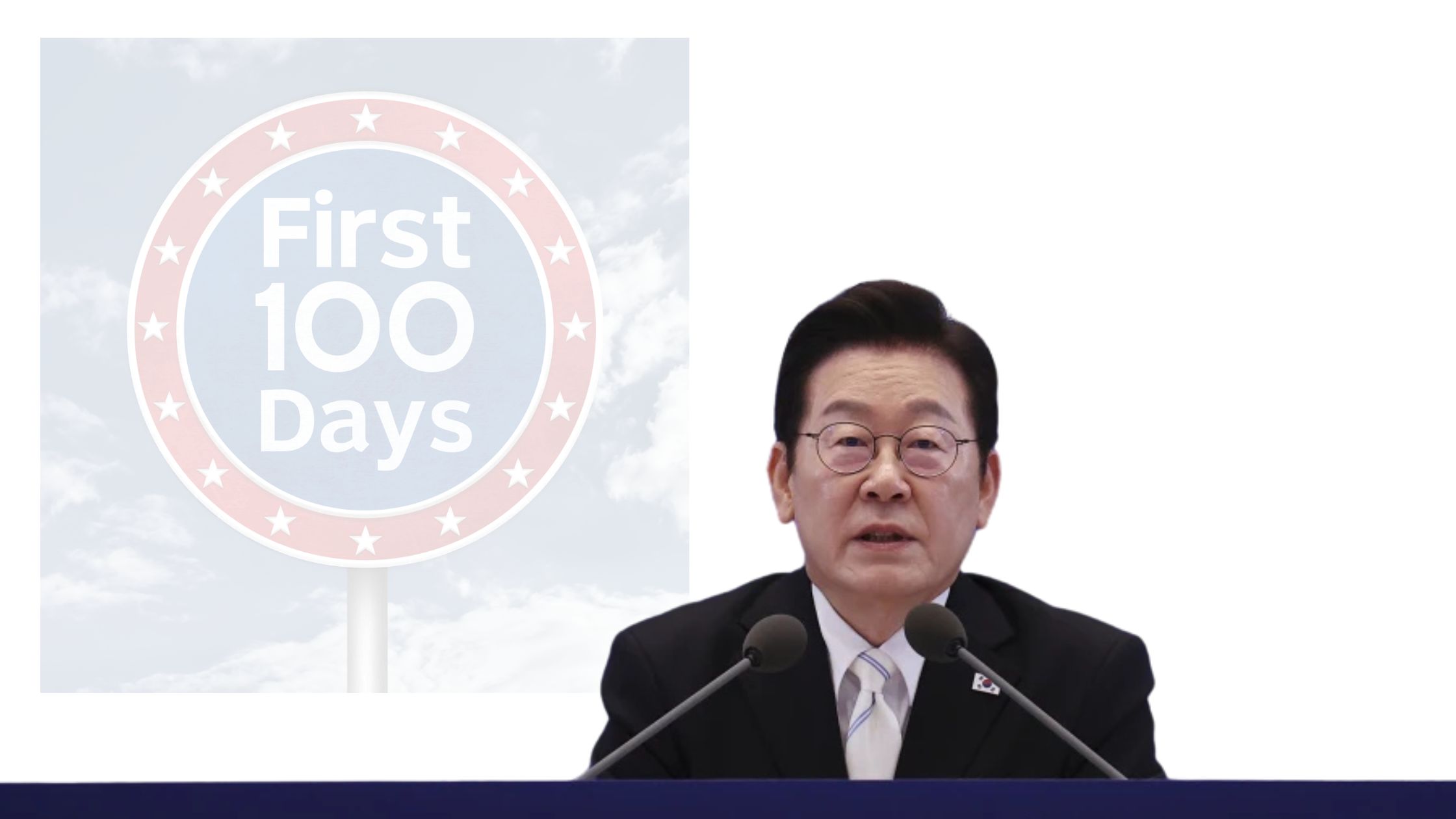
South Korean President Lee Jae-myung held a press conference at the Blue House on September 11 to mark his first 100 days in office. His remarks came against the backdrop of deep political divisions following former president Yoon Suk-yeol’s failed attempt to impose martial law in December.

Lee emphasized his intention to govern beyond partisan divides, pledging to be “a president for all.” He noted that parliamentary inquiries into Yoon’s martial law bid, alleged interference in a marine death probe, and corruption allegations involving Yoon’s wife remain ongoing. The new administration, he said, would focus on “recovery and restoration” after months of political turbulence.
Economic and Social Priorities
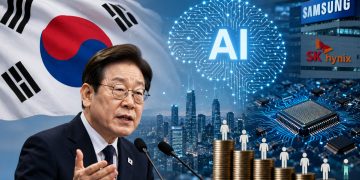
Lee highlighted the government’s early achievements, particularly the record-setting performance of the Korea Composite Stock Price Index (KOSPI), which he framed as a sign of renewed economic confidence. At the same time, he acknowledged the challenge of sluggish consumption and pledged to build “a solid society for the lives of the people.”
- Stock market boost: KOSPI reached an all-time high in the early months of Lee’s presidency.
- Focus on households: The president underlined his commitment to addressing weak consumer spending.
Lee assured the public that despite assuming office without a transition period, his administration had managed to stabilize the political climate and strengthen market confidence.
Push for Prosecutorial Reform
A central theme of the press conference was Lee’s support for overhauling South Korea’s powerful prosecution service. The Democratic Party (DP), under the leadership of Jung Chung-rae, has pressed ahead with reforms designed to:
- Separate the authority to investigate and prosecute into two distinct bodies.
- Increase the number of Supreme Court justices to better distribute judicial power.
Lee, who himself faced repeated investigations before becoming president, argued that reforming prosecutorial powers is essential to restoring fairness in the justice system. He endorsed the DP’s goal of finalizing reforms before the Chuseok holidays in October, while acknowledging that the timeline remains uncertain.
By aligning himself with these efforts, Lee has signaled a willingness to confront conservative resistance while also appealing to voters who see the prosecution as wielding disproportionate influence.
Strains With the United States Over Immigration Raid
The most delicate issue Lee faced at the press conference was South Korea’s relationship with the United States. On September 4, U.S. Immigration and Customs Enforcement (ICE) raided Hyundai’s battery plant in Georgia, detaining more than 300 South Korean workers.
South Korea’s Foreign Ministry later confirmed that 330 detainees—including 316 Koreans—had been released and were scheduled to return home on September 12 aboard a chartered plane. The group also included Chinese, Japanese, and Indonesian nationals. Images of the workers in handcuffs and shackles triggered widespread anger in South Korea.
Lee described the incident as reflecting “cultural differences” in how the two countries handle immigration enforcement but cautioned that such actions could undermine corporate confidence in the U.S.
The Visa Question: A Barrier to Investment
The president made clear that unless Washington improves its visa system for skilled Korean workers, South Korean companies may hesitate to expand investments in America.
Currently, most firms rely on:
- Short-term visitor visas
- The Electronic System for Travel Authorization (ESTA)
These options, long tolerated, allow engineers and specialists to set up factories and equipment abroad. However, stricter enforcement by U.S. immigration authorities has put companies at risk.
“It’s not like these are long-term workers,” Lee noted. “When you build or install equipment at a plant, you need technicians—but the U.S. doesn’t have that workforce, and yet they won’t issue visas to let our people stay and do the work.”
Lee suggested that without reforms, the U.S. could lose major investments from South Korean firms.
Balancing Diplomacy With Washington
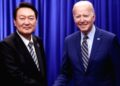
Although Lee avoided direct criticism of U.S. President Donald Trump, he acknowledged that the raid could damage trust. The arrests occurred shortly after Seoul pledged $350 billion in new U.S. investments to avoid Trump’s steep tariffs, fueling perceptions at home that South Korea was unfairly targeted.
South Korean lawmakers across party lines condemned the crackdown, and one major newspaper likened it to a “rabbit hunt.” Lee’s cautious response underscored the difficulty of maintaining cooperative ties with Washington while protecting South Korean corporate interests.
North Korea: Dialogue Amid Limited Leverage
Lee also touched on inter-Korean relations, reiterating his determination to defuse tensions despite Pyongyang’s refusal to engage. He acknowledged South Korea’s limited influence, noting that North Korea continues to view the United States as its primary negotiating counterpart.
Lee’s strategy, however, is to pursue gestures of goodwill regardless of Pyongyang’s reactions. He stressed the importance of reducing tensions even without assurances of reciprocity, framing peace as a responsibility rather than a bargaining chip.
Still, he admitted that the deepening alignment between North Korea, China, and Russia will complicate Seoul’s diplomacy. “As captain of the ship of South Korea,” Lee said, “I will make this a sovereign country where the people can feel like masters of their nation and achieve happiness together.”
Outlook: Navigating Domestic and Global Tests
President Lee’s first 100 days have showcased both his reformist zeal and the constraints he faces. Domestically, he is attempting to reshape a prosecution service long viewed as overpowered. Internationally, he must balance South Korea’s economic reliance on the United States with growing public frustration over perceived disrespect from its ally.
Lee’s pledge to serve as “a president for all” will be tested by these twin challenges. The months ahead—particularly the push for prosecutorial reform before Chuseok and ongoing negotiations with Washington over visas—will determine whether his administration can transform early rhetoric into lasting results.