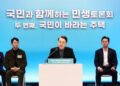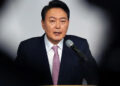
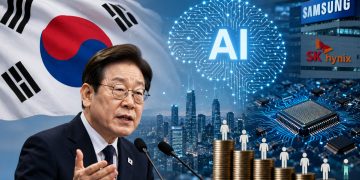
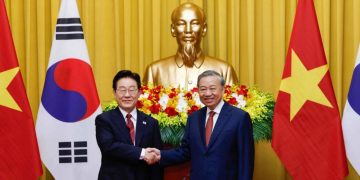
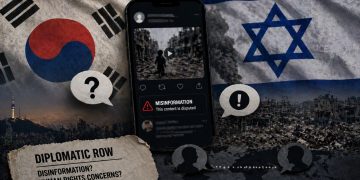

South Korean President Lee Jae-myung has pledged strong support for citizens detained in a large U.S. immigration raid at a Hyundai-LG battery plant in Georgia. On Thursday, U.S. immigration agents arrested around 475 workers at the facility near Savannah, in what officials described as the biggest single-site enforcement action of President Donald Trump’s second term. More than 300 of those detained were South Korean nationals, prompting Seoul to launch an urgent diplomatic response.

Foreign Minister Cho Hyun said the government has formed a special team to handle the crisis and is prepared to send officials to Washington if necessary. On Sunday, the presidential office confirmed that Seoul and Washington had reached an agreement to release the detained South Koreans, who will be flown home on a chartered plane once administrative steps are finalized.
Foreign Minister Cho Hyun said Seoul felt a “heavy responsibility” for the arrests and vowed to protect the rights of its citizens. The government quickly formed a response team and prepared to send senior diplomats to Georgia, with Cho himself ready to travel to Washington if required. Officials emphasized that the economic activities of Korean firms and the legal rights of Korean nationals must not be unfairly violated during U.S. enforcement actions.
Videos released by U.S. Immigration and Customs Enforcement (ICE) showed agents arriving with armored vehicles and even a helicopter. Workers, many wearing Hyundai or LG vests, were shackled at the wrists, ankles, and waist before being led onto buses. In one instance, two workers attempted to hide in a pond before being caught.
Steven Schrank, the special agent in charge of Homeland Security Investigations in Georgia, said the raid was the “largest single-site enforcement operation” in the agency’s history. He argued that foreign companies are welcome to invest in the U.S., but they must comply with immigration and labor laws. “This operation sends a clear message that those who exploit the system will be held accountable,” Schrank said.
President Donald Trump defended the raid, calling the workers “illegal aliens” and insisting that ICE was “just doing its job.” He denied that the arrests had strained ties with Seoul, stressing that the U.S. wanted to maintain strong relations. Trump suggested that arrangements could be made for some skilled South Korean workers to temporarily remain in the country to train Americans in specialized fields such as battery production.
Hyundai said none of those detained were directly employed by the company but promised to review its suppliers and subcontractors. LG Energy Solution confirmed that 47 of its employees and about 250 contractor workers had been detained. The company suspended all non-essential travel to the U.S. and recalled some staff from business trips while it gathered further details and pledged to cooperate with authorities.
South Korea’s Foreign Ministry said negotiations with Washington had concluded and that the detained nationals would soon be flown home on a chartered plane. A spokesperson added that Seoul would push for reforms to improve visa procedures for Korean citizens working on overseas investment projects. The episode, however, has already sparked debate over how South Korea should balance its massive economic commitments in the U.S. with the safety and legal protections of its workforce abroad.