





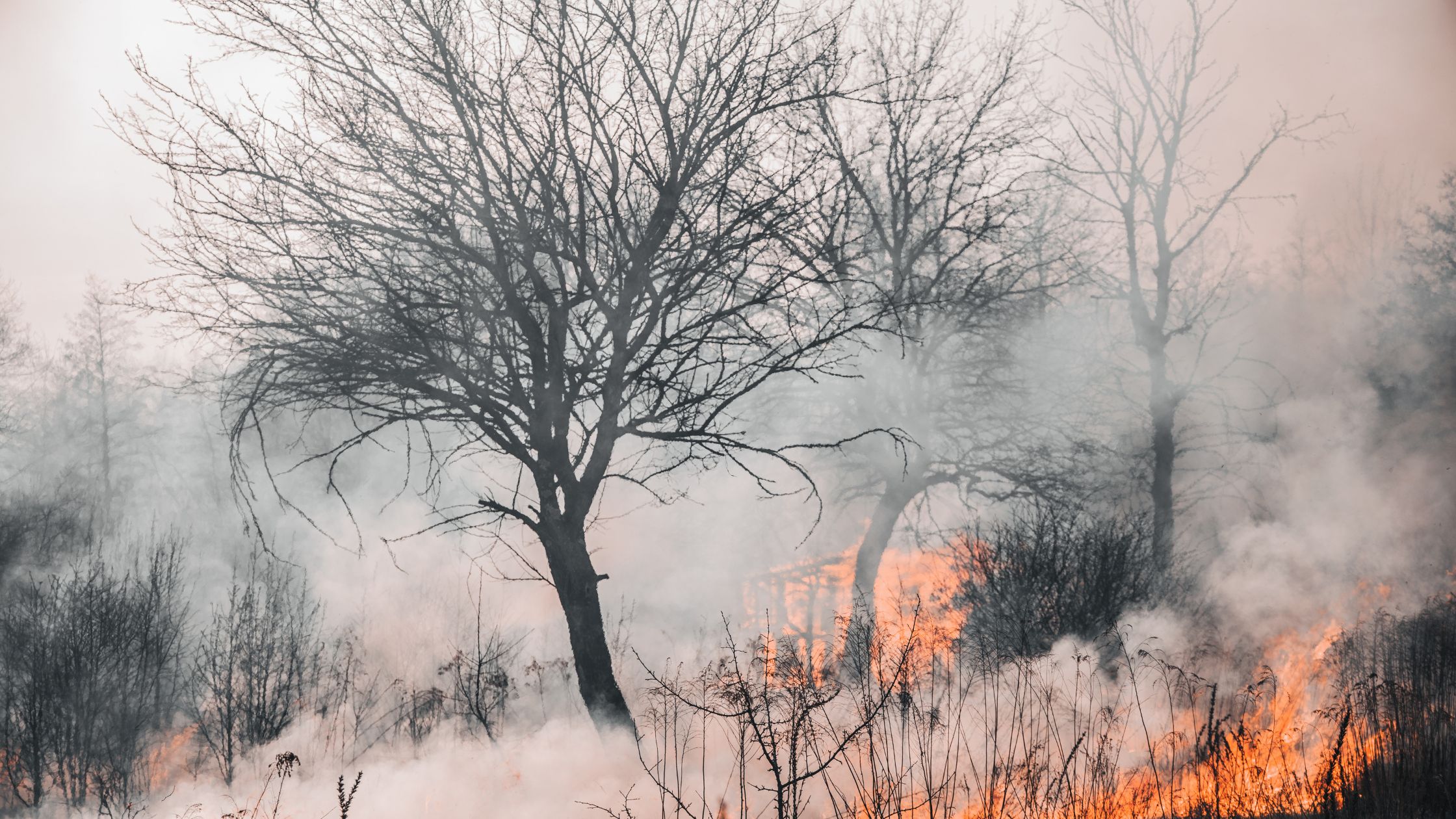
South Korean police are investigating a 56-year-old man suspected of accidentally starting one of the wildfires that recently devastated the country’s southeastern region. Authorities believe the man may have ignited the blaze while clearing overgrown grass at a family gravesite on a hill in Uiseong, one of the hardest-hit areas. The fire contributed to a disaster that claimed 30 lives and scorched over 119,000 acres of land.

The wildfires, which erupted on March 21 in Sancheong County and spread rapidly, destroyed thousands of homes, agricultural facilities, and cultural landmarks, including the 1,300-year-old Gounsa Temple. While firefighters have fully contained the blazes, police have booked the man in connection with the fire, a process that does not signify arrest but confirms he is under investigation.
Reports indicate that his daughter informed investigators that the fire began when her father attempted to burn tree branches with a cigarette lighter. However, he has denied the allegations. Police have yet to confirm if others will be questioned, as officials suspect multiple human-related causes, including burning trash and welding sparks.
The wildfires, intensified by dry and gusty winds, spread rapidly, destroying thousands of homes and reducing vast stretches of forested hills to ash. With assistance from rainfall, firefighters managed to bring the blazes under control by Friday. The fires claimed 30 lives, mostly elderly residents who struggled to escape in time. Among the deceased were four firefighters and emergency workers, as well as a pilot whose helicopter crashed during aerial firefighting operations. At least 45 others sustained injuries, with nine in critical condition.
In addition to the human toll, the fires left severe property damage, destroying over 6,000 buildings. The southeastern city of Andong and the coastal town of Yeongdeok each lost more than 1,000 homes, while Uiseong saw more than 330 homes reduced to ruins.
The devastation extended to cultural heritage sites, including the historic Gounsa Temple in Uiseong. Most of the structures were destroyed, leaving only the ceremonial bell intact. Fortunately, some treasured artifacts, including a seated stone Buddha, were relocated before the flames reached the temple.
The South Korean military deployed around 7,500 troops and over 420 helicopters, including support from U.S. Forces Korea, to aid in the firefighting efforts. More than 10,000 firefighters, police officers, and civil servants were mobilized to combat the flames across multiple regions. Thousands of residents were evacuated to shelters, and five areas—Uiseong, Andong, Cheongsong, Yeongyang, and Yeongdeok—were declared special disaster zones to expedite recovery efforts.
Acting Interior Minister Ko Ki-dong described the wildfires as causing “the greatest loss of lives and property in our history.” Prime Minister and acting President Han Duck-soo assured that the government would provide comprehensive support to victims until they could rebuild their lives. He also called for a review of the country’s wildfire response strategy, emphasizing the need for improved disaster prevention measures, particularly in light of climate change’s growing impact.