
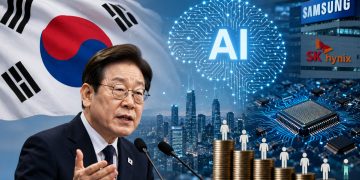

South Korea’s court has overturned Prime Minister Han Duck-soo’s impeachment, returning him to his former position as acting leader. The ruling comes amid ongoing political turmoil, as the court has yet to rule on a separate impeachment case against President Yoon Suk Yeol, who was suspended after briefly declaring martial law in December.

Han took over as acting president after Yoon’s suspension but was removed by lawmakers two weeks later for declining to appoint more justices to the Constitutional Court. In his absence, Deputy Prime Minister Choi Sang-mok assumed leadership until the court’s recent ruling restored Han to his role.
South Korea has been in political turmoil since President Yoon Suk Yeol’s controversial attempt to impose martial law in December. Shortly after taking over as acting president, Han Duck-soo refused to appoint new justices to the Constitutional Court—an action the opposition viewed as an obstacle to Yoon’s impeachment. In response, lawmakers voted to impeach Han, further deepening the country’s political crisis.
On Monday, the Constitutional Court ruled 7-1 to overturn Han’s impeachment, stating that the allegations against him did not meet the legal threshold for removal. Five justices found insufficient grounds for impeachment, while two argued that the motion itself lacked legitimacy due to insufficient parliamentary support. One justice voted in favor of impeachment. The decision reinstates Han as acting president while the court continues deliberations on Yoon’s fate.
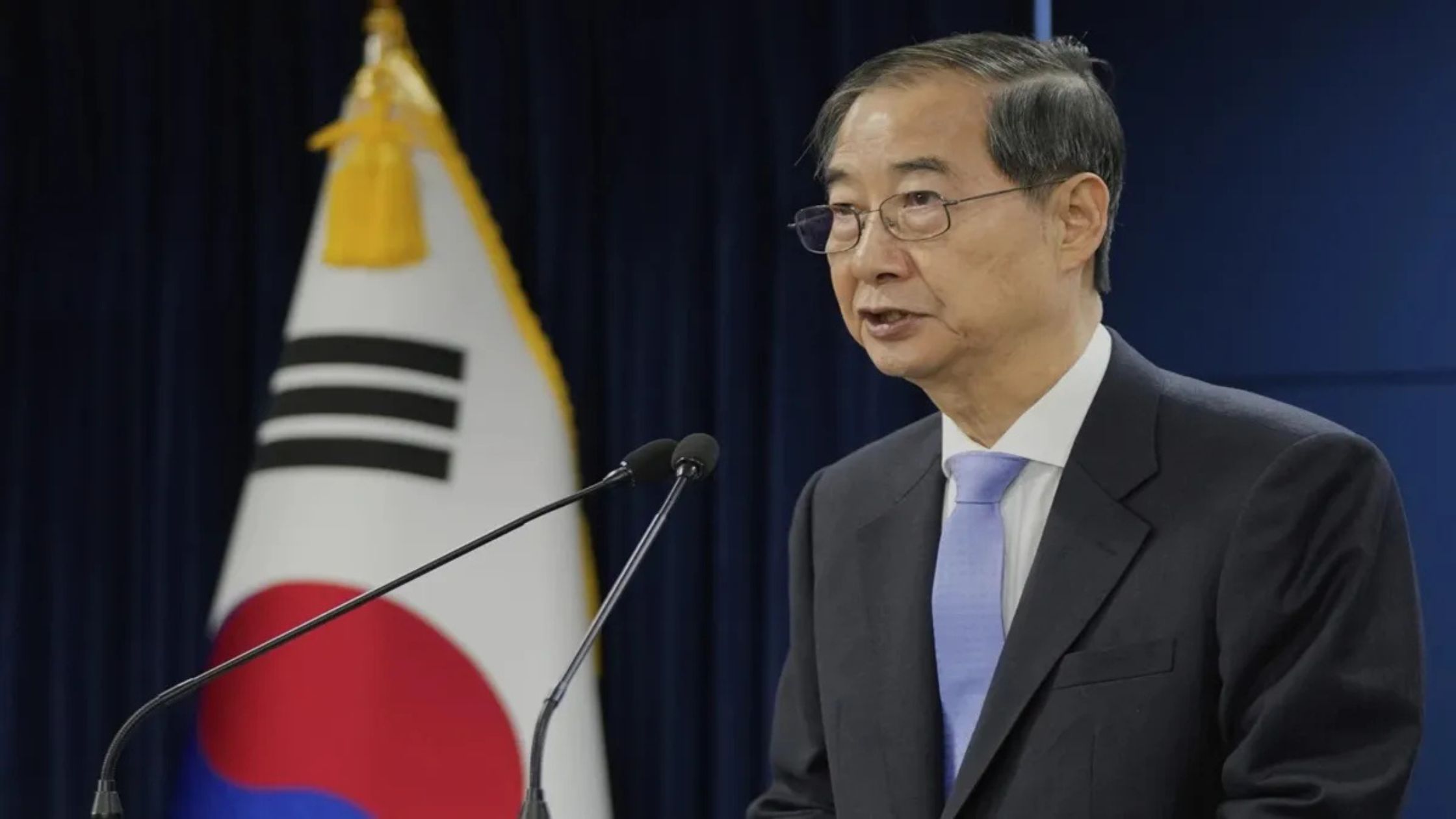
After the ruling, Han thanked the court and vowed to bring back political stability. In a televised speech, he stated, “Now is the time for unity—our country must progress.” He also stressed the importance of tackling South Korea’s pressing economic and geopolitical issues.
Meanwhile, the court has yet to decide on Yoon’s impeachment, a ruling that could determine South Korea’s political future. If the court upholds Yoon’s removal, a presidential election must be held within 60 days. If dismissed, Yoon will regain his powers immediately. The uncertainty has fueled mass protests in Seoul, with both Yoon’s supporters and critics taking to the streets.
Observers caution that Han’s reinstatement does not necessarily indicate how the court will rule on Yoon. Political analyst Leif-Eric Easley noted that the court’s decision aimed to maintain stability rather than take a stance on Yoon’s case. However, the ruling is expected to energize Yoon’s conservative base, adding another layer of tension to the unfolding political drama.
Han’s reinstatement is widely seen as a prelude to the court’s much-anticipated ruling on Yoon’s impeachment. Analysts suggest that by siding with conservatives in Han’s case, the court may be aiming to project neutrality and reinforce its credibility ahead of the more contentious decision on Yoon’s fate. The ruling is expected in the coming days, with at least six of the eight justices required to uphold the impeachment for Yoon’s removal to take effect.
Meanwhile, Yoon’s legal troubles continue, as he faces serious criminal charges, including insurrection, linked to his brief but controversial martial law order on December 3. A Seoul court recently allowed him to stand trial without detention, leading to large-scale demonstrations both in support of and against him across major cities. If found guilty, he could face life imprisonment or even the death penalty. South Korea remains on edge as the court deliberates, with the country’s political landscape deeply fractured.