




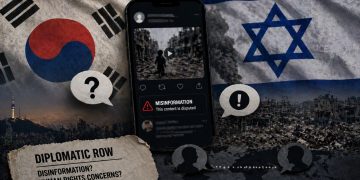


Authorities warn that cross-border disinformation poses risks to public safety, social order, and Korea’s international image
South Korean authorities have opened a criminal investigation into a Korea-born YouTuber active in Japan after he posted a video falsely claiming that “many mutilated bodies are frequently discovered in South Korea.” The creator, known online as Daebojjang or Devo-chan, has nearly 960,000 subscribers and directed the video toward Japanese viewers. In it, he alleged that Korea faces “serious murder and organ-trading problems” involving Chinese nationals entering the country without visas. The claims spread rapidly in Japanese online communities and social media, raising concerns about fear-mongering and damage to South Korea’s public reputation.

The Korean National Police Agency (KNPA) said it instructed the Seoul Metropolitan Police Agency’s cyber investigation unit to launch an immediate probe, describing the dissemination of fabricated information as a “serious crime.” Police stated that they would take appropriate legal action after verifying the facts, emphasizing that intentional disinformation targeting foreign audiences can undermine both domestic stability and Korea’s global credibility.
Potential Charges and YouTube Cooperation Under Review
Investigators are examining whether the YouTuber’s actions fall under the Framework Act on Telecommunications, which prohibits spreading false information through electronic networks. As part of the inquiry, the police plan to request cooperation from YouTube to confirm Daebojjang’s nationality and current residence. Authorities noted that the video not only fueled online speculation abroad but also generated unnecessary anxiety and social confusion at home.
Officials stressed that the dissemination of unverified claims can distort foreign perceptions of Korea’s public safety and potentially deter visitors or investors. Such outcomes, they argued, amount to harm to the national interest.
Unfounded Claims Spark Fear Among Foreign Audiences
The controversy centers on a video uploaded on October 22, in which Daebojjang alleged that “the lower halves of 37 bodies” had been discovered in Korea and that “150 undisclosed investigations” into similar cases were underway. The only source he cited was an anonymous comment posted online in Korean, with no supporting evidence.
Despite the lack of verification, the video circulated widely among Japanese message boards and online communities. Some posts claimed South Korea’s public security had “collapsed,” and others expressed fear about traveling to the country. Police said this wave of misinformation highlighted the risks of false narratives gaining traction in foreign markets.
Police Highlight Broader Risks of Cross-Border Misinformation
Authorities said the rapid spread of the conspiracy video demonstrated how fabricated claims can influence international perceptions and disrupt social order. The KNPA stated that such disinformation may affect tourism, investment, and Korea’s broader national image. In a formal statement, the agency stressed that it would enforce the law once all facts were established.
A police official added that the case underscores the importance of responding quickly to false content shared across borders, especially when it undermines the public’s right to accurate information.
YouTuber Issues Defense but Acknowledges Removal of Videos
Following public scrutiny and confirmation of the investigation, Daebojjang released an explanatory video. He argued that he had merely “introduced comments posted by Koreans” and claimed Korean media had overlooked discussions about violent crime. He denied any intent to tarnish Korea’s image and insisted that his remarks were being misinterpreted in Japan.
He further stated that he did not “maliciously” spread misinformation but wanted to present “various opinions.” Despite this claim, he announced that he would delete all Korea-related videos from his channel, including those critical of the country, and said he would cooperate with the investigation.
Strong Reactions From Online Communities in Korea and China
The incident provoked strong responses from online communities across East Asia. On China’s Weibo, one commenter accused the YouTuber of seeking attention through sensational claims. Many South Korean netizens expressed anger, arguing that spreading falsehoods that harm the national interest should be met with strict punishment. Some went as far as suggesting that he should lose his nationality if he continues spreading misinformation abroad.
These reactions reflected growing public concern over foreign-targeted online content that misrepresents Korean society or fuels xenophobic narratives.
Authorities Signal Continued Crackdown on Digital Disinformation
Police reaffirmed that they will maintain close monitoring of misleading content distributed through major platforms, including foreign-language channels with large audiences. Authorities said they intend to respond “swiftly and firmly” to disinformation that destabilizes social order or damages Korea’s international standing.
The ongoing investigation into Daebojjang highlights the expanding challenge of cross-border misinformation and the need for coordinated responses between law-enforcement agencies and global digital platforms.