



A rare moment of humor highlights a wider diplomatic reset as Seoul navigates shifting power balances and cultural tensions with Beijing
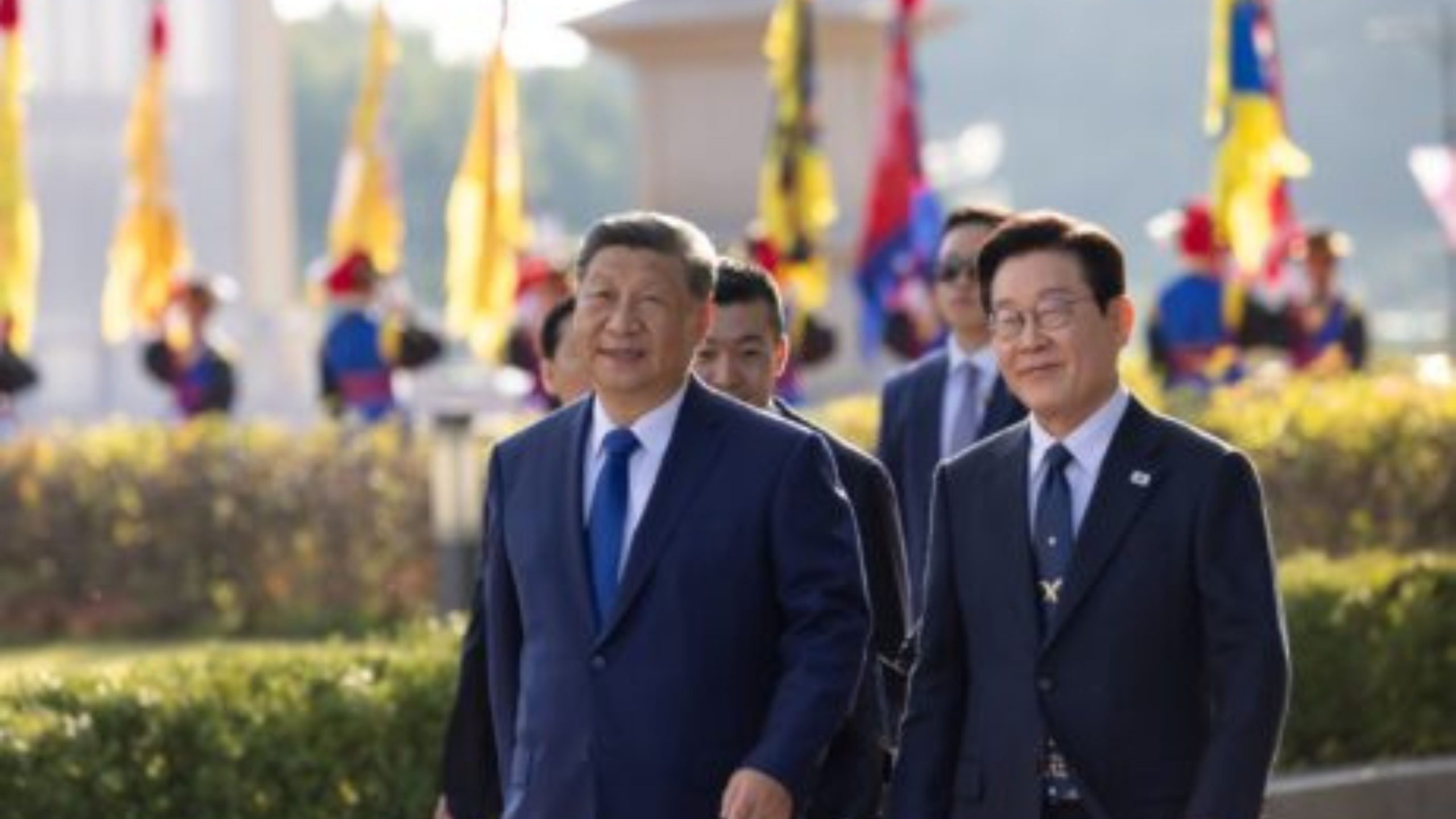
South Korean President Lee Jae-myung sparked an unexpected moment of laughter during his meeting with Chinese President Xi Jinping after asking whether the two Xiaomi smartphones gifted to him were “safe for communication.” Xi, smiling at the translated remark, responded that Lee should “check if there is a backdoor,” a pointed reference to hidden software that could enable monitoring. The brief exchange stood out in South Korea, where concerns about cyber security and Chinese surveillance remain deeply rooted.

The scene unfolded on November 1 during Xi’s visit to Gyeongju for the APEC Summit—his first trip to South Korea in more than a decade and his first bilateral meeting with Lee since the South Korean president took office in June. While the conversation was light, it quickly drew significant attention at home, and added an unexpected human tone to an otherwise strategic meeting.
A Rare Glimpse of Xi’s Unfiltered Side
Xi’s willingness to joke about espionage surprised South Korean media, which described the interaction as unusually candid for the Chinese leader. Analysts compared the moment to a recent hot-mic incident in Beijing, where Xi discussed biotechnology and longevity with North Korean leader Kim Jong-un and Russian President Vladimir Putin during a military parade. Together, these moments suggest glimpses of Xi’s private demeanor that seldom appear in public.
Clips of the Gyeongju encounter circulated widely online, with some viewers likening the leaders’ exchange to a staged verbal sparring match. According to Lee’s spokesperson, the ease between the two leaders reflected the rapport built across various ceremonial and cultural events during the summit, including the presentation of a handcrafted Go board to Xi, who shares Lee’s interest in the ancient strategy game.
Diplomacy Amid Shifting Strategic Realities
Beyond the humor, the summit held serious implications for Seoul–Beijing relations. Lee emphasized that three decades of cooperation had significantly shaped both nations’ economic trajectories. He called for renewed strategic partnership, positioning the visit as an opportunity to stabilize ties that have experienced repeated tensions since the THAAD dispute in 2016.
However, Lee’s recent remarks in Washington pointed to a recalibration in Seoul’s foreign-policy strategy. His comment that South Korea can no longer rely on a dual approach—security with the United States and economic cooperation with China—signaled a potential shift toward clearer alignment with Washington. This posture challenges earlier expectations that Lee, a liberal leader, might adopt a more China-friendly stance.
Public opinion in South Korea has increasingly turned skeptical of China, driven by memories of economic retaliation and concerns over political interference. Yet Seoul cannot disregard Beijing’s central role in regional stability, particularly regarding North Korea’s nuclear program.
North Korea’s Contradictory Signals
The summit took place against a backdrop of unpredictable messaging from Pyongyang. As Seoul and Beijing discussed conditions for resuming dialogue with the North, Vice Foreign Minister Park Myong Ho dismissed denuclearization as a “pipedream.” Although the tone was less severe than recent statements from Kim Jong-un or Kim Yo-jong, it still represented clear resistance to negotiations.
On the same day, North Korean state media reported Kim Jong-un’s inspection of a major military corps—an unmistakable sign that Pyongyang remains focused on military posture rather than diplomatic engagement. The timing underscored the limits of Seoul and Beijing’s influence, even as they seek common ground on peninsula security.
Cultural Diplomacy and Market Reactions
Xi’s visit revived speculation that China may gradually relax its unofficial restrictions on Korean entertainment, introduced after the THAAD deployment in 2016. During the summit dinner, Xi briefly greeted JYP Entertainment founder Park Jin-young, who also chairs Seoul’s cultural exchange commission. South Korean entertainment stocks surged the following Monday after lawmakers reported that Xi reacted positively to the idea of Korean performers returning to China.
However, Seoul’s cultural exchange commission urged caution, noting that diplomatic greetings should not be misinterpreted as policy change. Experts echoed that view, arguing that Beijing may consider limited cultural exchanges but is unlikely to immediately lift all restrictions. The extent of future cultural cooperation will depend heavily on broader political and security dynamics.
Nonetheless, agreements signed during the summit—including a memorandum between KBS and China Media Group—suggest that both sides see cultural engagement as a manageable, low-risk avenue for rebuilding trust.
A Slow but Intentional Reset
Xi stressed that stable and healthy bilateral relations align with the interests of both nations and the broader region. Beijing expressed willingness to enhance communication and cooperation, signaling a desire to manage tensions amid global economic uncertainty and evolving U.S.–China competition.
For Seoul, the challenge lies in navigating its alliance with Washington while maintaining pragmatic ties with Beijing. Lee’s approach—asserting national interests while seeking areas of cooperation—reflects a balancing act shaped by security pressures, economic interdependence, and shifting public sentiment.
Conclusion
The smartphone joke may have been brief, but its symbolism resonated deeply in South Korea. It offered a rare look at Xi’s lighter side while underscoring the complexity of Seoul–Beijing relations. As both governments assess how to stabilize ties, cultural exchanges, economic coordination, and shared concerns over North Korea will test whether the renewed dialogue can translate into sustained cooperation.
South Korea’s strategic landscape continues to evolve, and the Gyeongju summit suggests that even small gestures—humorous or diplomatic—can carry outsized significance in shaping the region’s future.