



South Korea’s Constitutional Court has formally dismissed President Yoon Suk Yeol from office, confirming the National Assembly’s earlier impeachment decision. The impeachment stemmed from Yoon’s controversial attempt to declare martial law last year—a move that plunged the country into one of its most serious political crises in recent history. The court’s ruling on Friday stirred strong reactions, as both supporters and opponents of Yoon gathered in Seoul to witness the announcement.

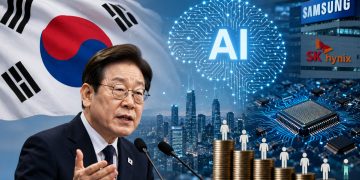
In accordance with the constitution, South Korea must hold a presidential election within 60 days of Yoon’s removal. Prime Minister Han Duck-soo will continue to serve as acting president until the election, which is expected to determine the country’s next leader. Early opinion polls suggest that Lee Myung, leader of the opposition Democratic Party, is currently the frontrunner for the presidency.
After months of uncertainty, many South Koreans now feel a sense of relief as the nation prepares to move forward. The court’s decision has offered a degree of closure, but the political storm sparked by Yoon Suk Yeol’s short-lived military action is far from over. His six-hour imposition of martial law on December 3 deeply unsettled the country, reviving memories of its authoritarian past and shaking public trust in democratic institutions.
The Constitutional Court strongly rebuked Yoon’s actions, with all eight justices voting to remove him. Acting Chief Justice Moon Hyung-bae said Yoon’s decision to send troops to parliament was an abuse of power that violated constitutional principles and the rule of law. He described it as a “grave betrayal of the people’s trust” and said it caused widespread chaos across society, including economic and foreign affairs. The verdict was broadcast live and met with cheers and emotional reactions across Seoul.
Despite the ruling, the political landscape remains tense and divided. While Yoon’s People Power Party has accepted the court’s decision, Yoon himself has yet to do so. In a statement, he expressed regret but did not directly address the ruling. His legal team accused the court of bias, claiming the verdict was politically motivated and unjust. Yoon cannot appeal the ruling, but having vowed to fight until the end, he may continue to resist quietly from outside official power.
The former president still enjoys strong support among a segment of the population. His claims about foreign infiltration and election fraud have gained traction, fueling weekly protests in the capital. Far-right rhetoric has grown louder, with increasing distrust toward South Korea’s courts and electoral system. Surveys indicate more than a third of citizens now question the court’s impartiality, while a significant minority distrust the voting process.
As the country prepares for a new election within 60 days, it faces a difficult task: choosing a leader capable of healing divisions and restoring faith in democratic institutions. The political vacuum comes at a sensitive time, with renewed economic pressure from the United States under President Donald Trump. Many fear that Trump’s trade policies and expected demands on defense spending could place South Korea in a challenging position. The next president will need to act quickly and decisively to navigate both domestic unrest and growing international pressure.
Yoon is not the only high-profile figure who has faced impeachment recently. Prime Minister Han Duck-soo, who now serves as interim leader, was also impeached last year for trying to block the appointment of constitutional court judges. He was later reinstated. South Korea had experienced similar political upheaval before—most notably in 2017 when President Park Hye was removed from office over a major corruption scandal.
Yoon’s martial law decree was overturned just six hours after it was announced, as lawmakers managed to enter parliament despite military efforts to seal it off. They voted unanimously to reject the order. On December 14, the National Assembly voted to impeach Yoon, accusing him of suppressing legislative functions, attempting to detain elected officials, and destabilizing the nation. Although Yoon later claimed he never intended to enforce full military rule, the damage had triggered months of unrest, which may not subside soon despite the court’s ruling.