



Dispute highlights risks of digital diplomacy as South Korea defends president’s remarks as human-rights concern
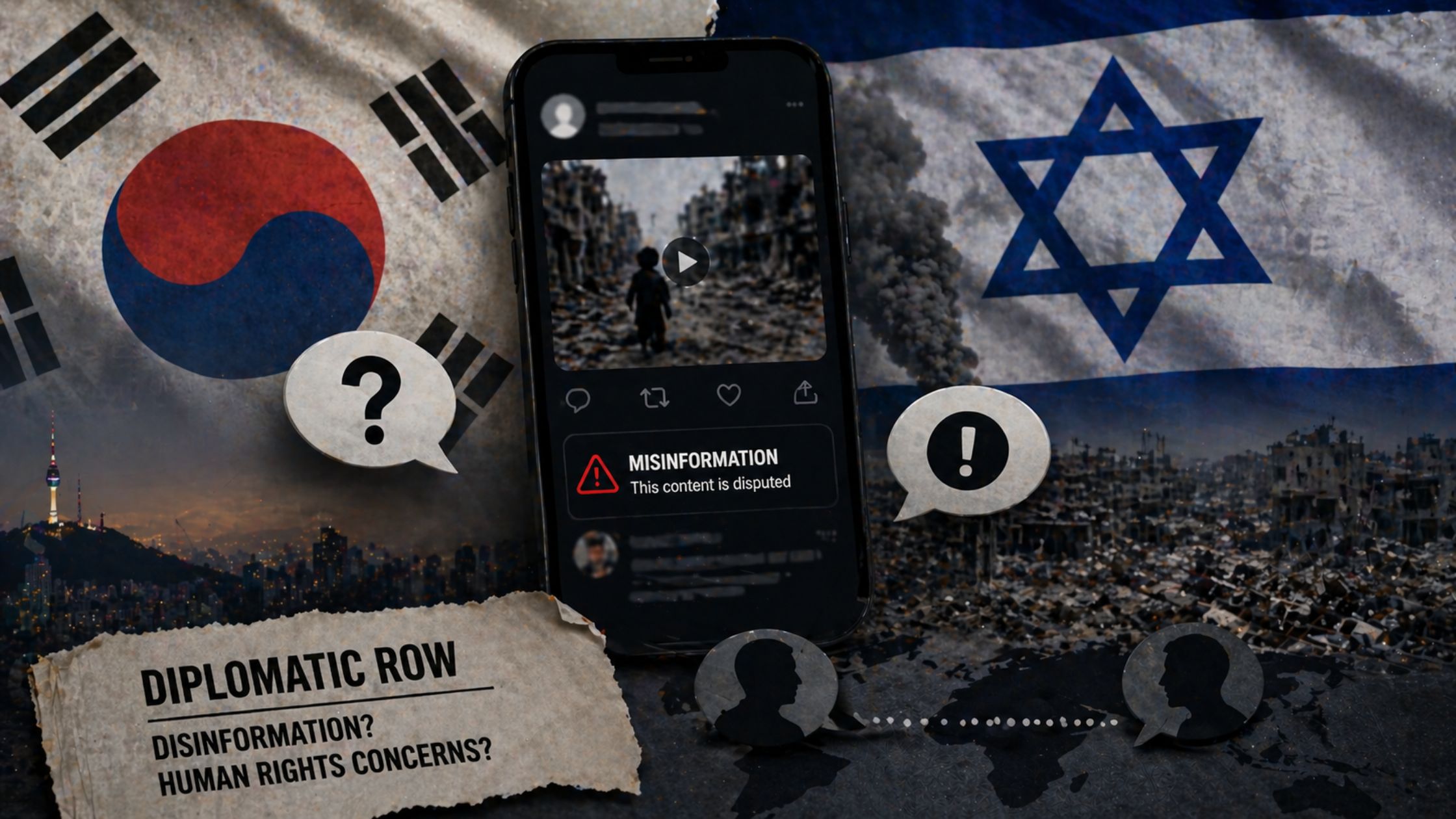
A social media post by South Korean President Lee Jae-myung has sparked a diplomatic dispute with Israel, drawing attention to the growing risks associated with real-time communication in foreign policy.

The controversy emerged in early April after Lee referenced widely circulated online footage that allegedly showed misconduct by Israeli forces in Gaza. In his post, the president raised questions about the incident and the response to it, prompting a swift reaction from Israeli officials who said the claims were based on misleading or inaccurate information.
Israel’s response framed the issue as one of factual accuracy. Officials argued that the material cited in the post had already been challenged and warned that repeating such claims risked amplifying disinformation. In contrast, South Korea positioned the remarks differently. Seoul said the president’s comments were not intended as a factual assertion, but as an expression of concern over civilian suffering and broader human-rights conditions in conflict zones.
This divergence in interpretation quickly transformed a single online post into a diplomatic exchange between the two governments.
From Post to Policy Friction
The episode illustrates how quickly informal communication can take on formal diplomatic significance. In earlier periods, statements on sensitive international issues would typically be delivered through official channels, often after internal review. Today, a short message shared online can prompt an immediate response from foreign governments. That dynamic is particularly volatile in the context of Gaza, where information is often contested and political sensitivities are high. In such an environment, even questions or expressions of concern can be interpreted as endorsements of one side’s narrative.
At the center of the dispute is a gap between intent and impact. South Korea has emphasized that Lee’s post was motivated by humanitarian concerns, seeking to highlight the need to protect civilians.
Israel, however, has focused on the consequences of the message, arguing that referencing disputed material can contribute to the spread of inaccurate claims, regardless of intent. This distinction has become a recurring challenge in digital diplomacy, where the speed of communication often outpaces verification and context.
Strategic Balancing for Seoul
For South Korea, the situation is particularly delicate. Seoul has traditionally maintained a cautious and balanced approach in the Middle East, supporting humanitarian principles while avoiding direct entanglement in regional disputes.
Lee’s remarks suggest a more visible engagement with human-rights issues, but the reaction from Israel underscores the risks involved when public commentary intersects with contested narratives. The government’s response indicates an effort to contain the fallout without escalating tensions, emphasizing values rather than disputing specific claims.
The Broader Implications
Beyond the immediate disagreement, the episode reflects a broader shift in how diplomacy is conducted. Leaders now communicate directly with domestic and global audiences, reducing the distance between personal expression and official policy. This immediacy can enhance transparency and responsiveness, but it also increases the likelihood of misinterpretation, particularly in fast-moving or emotionally charged situations.
The dispute also highlights the complexity of navigating information flows during conflict. Videos and reports circulate rapidly online, often without full verification, creating an environment where governments must respond to narratives that are still evolving. In such cases, the line between raising awareness and reinforcing unverified claims becomes increasingly difficult to manage.
South Korean officials appear focused on preventing further escalation by clarifying the intent behind the president’s remarks. Whether that approach will be sufficient depends on how both sides choose to interpret and respond to the episode moving forward. For now, the situation remains contained, but it has underscored a key reality: in an era of digital diplomacy, even a brief online comment can carry significant diplomatic weight.