


Seoul eyes synergy between its manufacturing strength and India’s AI-driven scale as both sides push trade, supply chain, and industrial collaboration
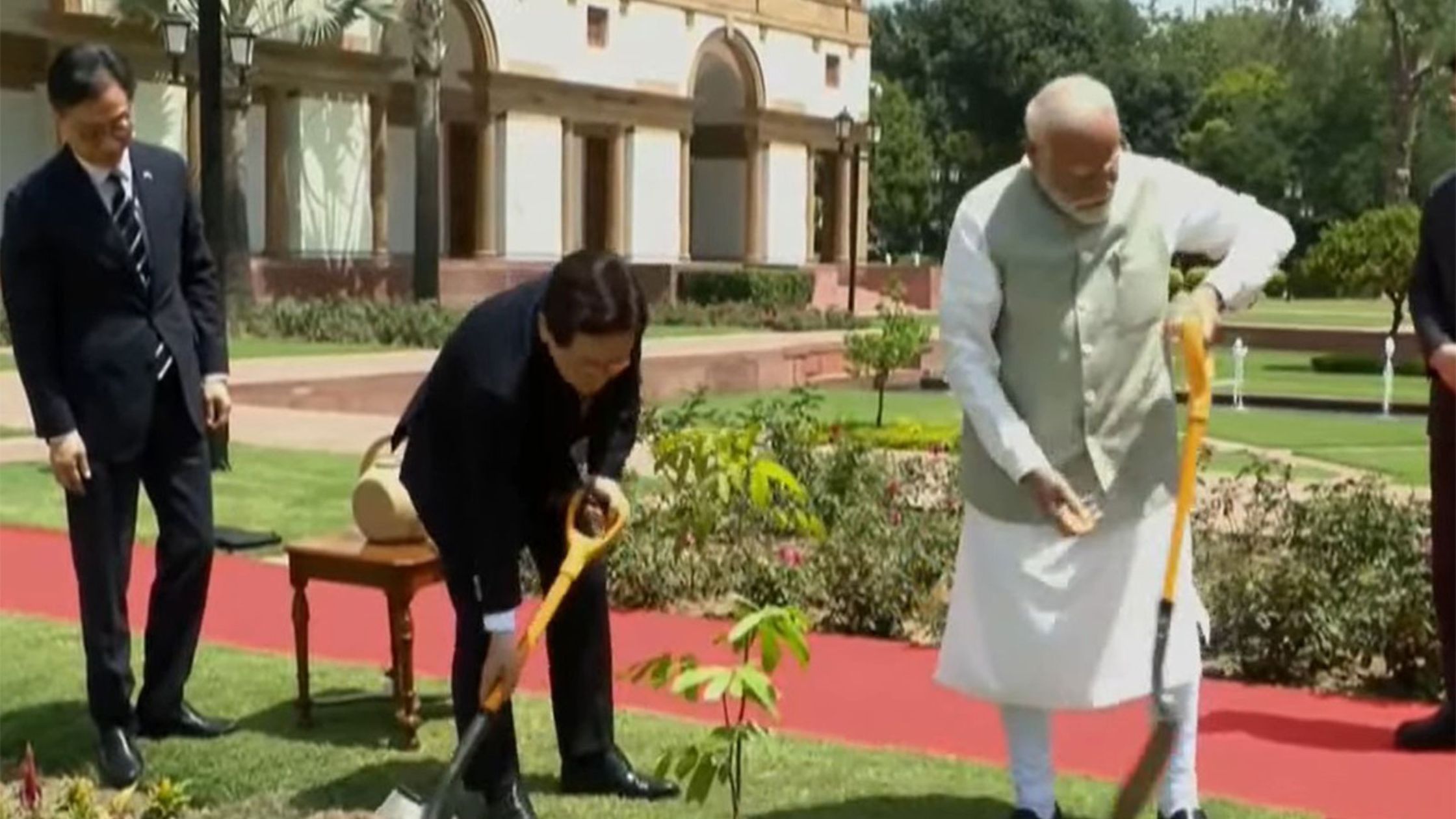
At Hyderabad House on April 20, Narendra Modi and Lee Jae-myung held bilateral talks that, on the surface, resembled a routine diplomatic engagement. But the substance—and the scale of economic and technological alignment behind it—points to something more deliberate: South Korea positioning India as a long-term partner in its next phase of tech-industrial growth.

The meeting, part of Lee’s three-day state visit and the first by a South Korean president to India in eight years, brought together not only political leadership but also a large delegation of Korean business leaders. The signal from Seoul is clear—India is no longer just an export destination, but increasingly central to South Korea’s strategy around manufacturing expansion, technology collaboration, and supply chain resilience.
What defines this partnership is a growing sense of complementarity rather than competition. South Korea enters with strengths in advanced manufacturing, semiconductors, shipbuilding, and heavy industry. India brings scale—both in market size and in its rapidly evolving digital ecosystem, particularly in artificial intelligence and software capabilities.
The discussions reflected this alignment, with both sides focusing on collaboration across semiconductors, AI, clean and nuclear energy, shipbuilding, and critical minerals. For Seoul, this presents an opportunity to integrate its industrial capabilities with India’s expanding digital and talent base—creating a more balanced and future-ready partnership.
Korea’s Strategic Push: Why India, Why Now
For South Korea, the renewed focus on India is not a standalone diplomatic gesture but part of a broader recalibration in response to shifting global economic dynamics. As traditional growth markets mature and geopolitical uncertainties reshape trade flows, Seoul is increasingly looking toward high-growth economies that can offer both demand and long-term strategic value.
- A high-growth demand engine
India’s position as one of the world’s fastest-growing major economies makes it an increasingly important destination for Korean exports and investment. Beyond short-term consumption, the country offers sustained demand across sectors such as electronics, infrastructure, mobility, and energy—areas where Korean companies already have strong capabilities. - An emerging manufacturing and supply chain hub
India’s push to strengthen its domestic manufacturing ecosystem aligns with South Korea’s need to diversify production bases. For Korean firms, this creates opportunities not just to export to India, but to build and scale operations within the country—bringing them closer to both local and global markets. - Diversification amid global uncertainty
Ongoing geopolitical tensions and supply chain disruptions have accelerated South Korea’s efforts to reduce overdependence on any single region. In this context, India is increasingly seen as a stable and scalable partner that can support more resilient supply chain strategies, particularly in critical sectors. - Strong industry-led momentum
The presence of a large business delegation—comprising around 200 industry leaders—alongside President Lee Jae-myung underscores that this engagement is being driven as much by corporate interest as by government policy. Korean companies are not only exploring opportunities but actively positioning themselves for long-term expansion in the Indian market.
These factors point to a clear shift in approach. For South Korea, engagement with India is moving beyond short-term diplomatic exchanges toward a more sustained effort to scale its economic and industrial footprint in one of the world’s most dynamic growth markets.
Key Outcomes from the Meeting
The bilateral talks between Narendra Modi and Lee Jae-myung translated into a set of concrete priorities that signal a more structured and forward-looking partnership. Rather than isolated agreements, the outcomes point toward a coordinated effort to deepen economic integration across technology, industry, and supply chains.
- Trade Expansion
Both sides set an ambitious target to nearly double bilateral trade to $50 billion by 2030. This reflects not just confidence in the relationship, but a recognition that current trade levels fall short of the partnership’s potential. Achieving this target will likely depend on expanding into new sectors and improving market access on both sides. - Technology Collaboration
A major focus of the discussions was on future-facing sectors such as semiconductors, artificial intelligence, and advanced manufacturing. For South Korea, this opens avenues to extend its technological leadership into a rapidly digitizing market, while also tapping into India’s growing pool of tech talent and innovation ecosystems. - Energy Cooperation
The talks included discussions on clean energy and nuclear collaboration, areas that are becoming increasingly central to both countries’ long-term strategies. For South Korea, which is actively advancing its nuclear and energy technologies globally, India represents both a partner and a potential market for large-scale energy projects. - Supply Chain Resilience
Both countries emphasized cooperation in critical minerals and the need to build more resilient supply chains. This reflects a shared response to recent global disruptions, with South Korea seeking to diversify sourcing and India positioning itself as a key node in emerging supply networks. - Industrial Growth
Traditional strengths such as shipbuilding, steel, and heavy industries remain central to the partnership. The discussions highlighted opportunities to expand cooperation in these sectors, particularly through joint ventures and local production, reinforcing South Korea’s industrial presence in India. - Trade Framework Upgrade (CEPA)
Plans to upgrade the Comprehensive Economic Partnership Agreement (CEPA) indicate a willingness to address existing bottlenecks in trade and investment. Enhancements to the agreement are expected to facilitate smoother flows of goods, services, and capital, while also helping to correct current imbalances in bilateral trade.
These outcomes suggest a shift away from a largely transactional relationship toward a more integrated economic framework—one that combines trade, investment, and technology collaboration into a cohesive long-term strategy.
From Trade to Investment-Led Growth
Another notable shift is the move from an export-driven model to deeper local investment. South Korea currently runs a significant trade surplus with India. Both countries are now looking to rebalance this by encouraging Korean companies to invest and produce within India. This approach not only addresses trade asymmetry but also positions Korean firms closer to one of the world’s most important future markets.
Large-scale industrial interest—including investments from companies such as POSCO—illustrates that this transition is already underway.
Beyond trade and technology, the partnership is also being shaped by global uncertainties. As supply chains face disruptions and energy security becomes a growing concern, South Korea is seeking to diversify its partnerships. India’s role in critical minerals, energy cooperation, and industrial capacity makes it a valuable partner in this context. The collaboration discussed during the meeting reflects a shared interest in building more resilient and diversified economic systems.
The phrase “from chips to ships,” used during the visit, captures the breadth of India–South Korea cooperation—but the significance runs deeper. For South Korea, this partnership is part of a broader strategic recalibration—one that prioritizes integration with high-growth economies, diversification of supply chains, and collaboration in future technologies.
India, with its scale and digital momentum, fits squarely into that vision. As the global economic landscape evolves, partnerships that combine technological depth with market scale will define the next phase of growth. In that equation, India is no longer peripheral—it is becoming central to South Korea’s long-term strategy.
Image credits: ANI