


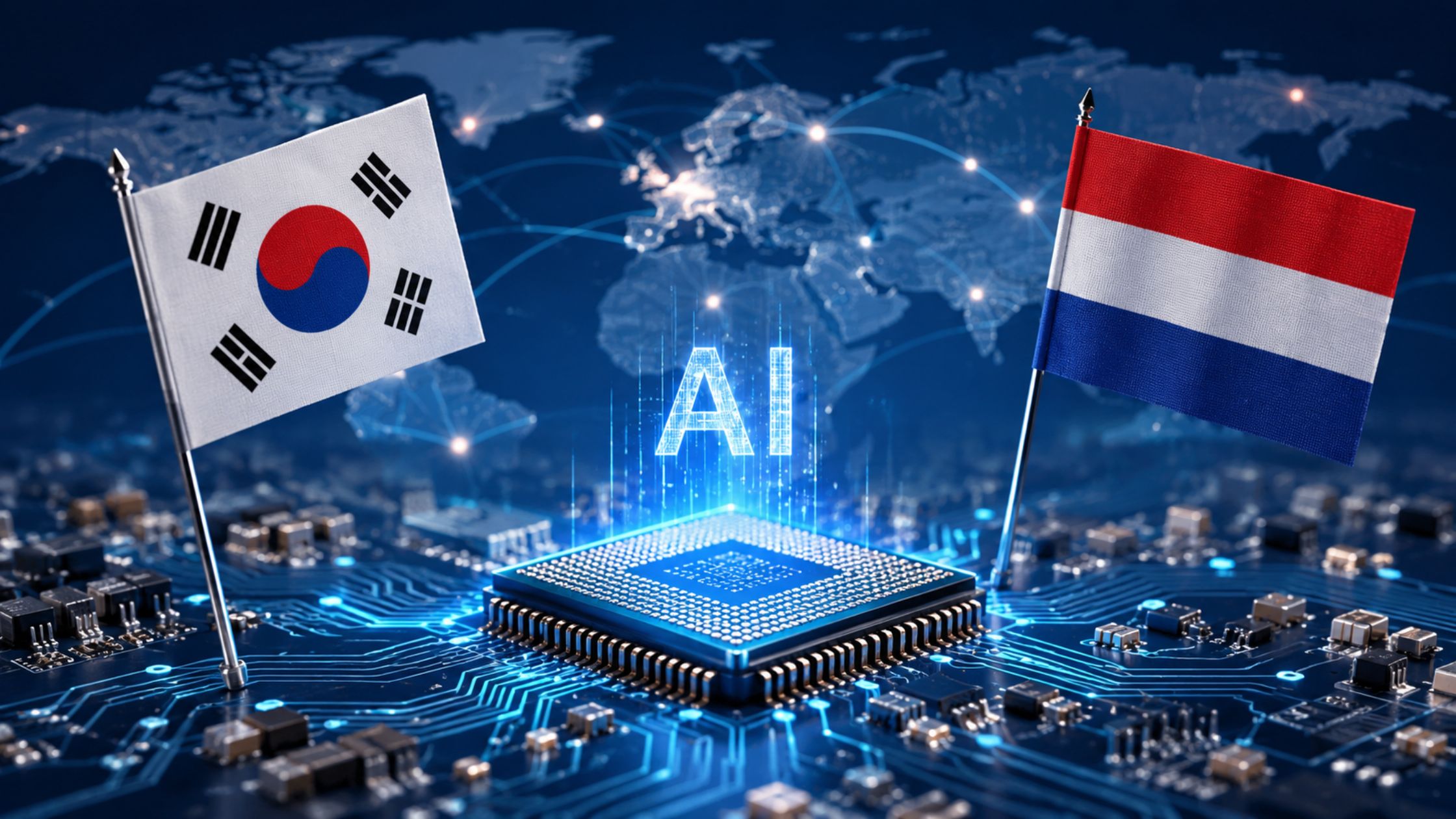
Lee Jae Myung and Dutch Prime Minister Rob Jetten agree to expand cooperation in chips, artificial intelligence, quantum technology, batteries, and offshore wind energy.
South Korean President Lee Jae Myung and Dutch Prime Minister Rob Jetten have agreed to deepen cooperation in semiconductors, artificial intelligence, quantum technology, and other advanced industries, highlighting the growing strategic importance of ties between two countries that play critical roles in the global technology supply chain.

The agreement came during the leaders’ first phone conversation since Jetten took office, according to South Korea’s presidential office. During the call, the two leaders discussed expanding cooperation in semiconductors, AI, batteries, quantum technology, and offshore wind energy.
The discussions reflect the increasing importance of technology partnerships as governments and companies around the world compete for leadership in artificial intelligence, advanced chip manufacturing, and next-generation digital infrastructure.
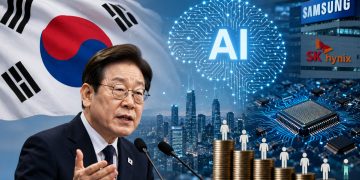
The Netherlands occupies a unique position in the global semiconductor industry through ASML, the Dutch company that produces the world’s most advanced extreme ultraviolet (EUV) lithography systems. These machines are essential for manufacturing cutting-edge semiconductors, and South Korean chipmakers Samsung Electronics and SK hynix are among ASML’s key customers.
As AI adoption accelerates worldwide, demand for advanced semiconductors has surged, making chip manufacturing capacity and supply chain resilience increasingly important for both economic growth and national competitiveness.
For South Korea, closer cooperation with the Netherlands aligns with broader efforts to strengthen its position as a global semiconductor leader. The country is home to some of the world’s largest memory chip manufacturers and has been increasing investments in AI infrastructure, semiconductor research, and next-generation computing technologies.
The latest discussions also build on momentum created during former President Yoon Suk Yeol’s state visit to the Netherlands in December 2023. During the visit, the two countries agreed to strengthen cooperation in semiconductors and advanced technologies, while exploring ways to enhance supply chain security and joint research efforts.
Since then, the relationship has evolved beyond traditional trade and investment ties into a broader technology partnership. Semiconductors have become a strategic industry at the center of global competition, with governments increasingly viewing chip production as a matter of economic security and technological leadership.
The inclusion of artificial intelligence and quantum technology in the latest talks underscores the growing importance of emerging technologies in bilateral relations. Governments and technology companies worldwide are investing heavily in these fields as they seek breakthroughs in computing power, cybersecurity, and industrial innovation.
The leaders also discussed batteries and offshore wind energy, signaling opportunities for expanded cooperation in clean energy industries. South Korea is home to major battery manufacturers including LG Energy Solution, Samsung SDI, and SK On, while the Netherlands has established itself as one of Europe’s leading offshore wind markets.
The strengthening partnership comes at a time when countries are increasingly forming technology alliances to secure access to critical technologies, diversify supply chains, and support innovation in strategic sectors.
As global demand for AI infrastructure continues to grow, cooperation between South Korea and the Netherlands is expected to play an increasingly important role in advancing semiconductor innovation and strengthening the broader technology ecosystem.