

President Lee Jae Myung signals crisis-level response as oil shock exposes structural vulnerabilities
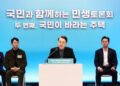
South Korea has warned of a potential “economic emergency” as disruptions in global energy supplies, driven by escalating conflict in the Middle East, begin to impact the country’s economy. President Lee Jae Myung said the government may consider invoking emergency economic powers if the situation worsens, underscoring the severity of the unfolding crisis.

The warning comes as rising oil prices and supply instability threaten to push up inflation and strain key industries in Asia’s fourth-largest economy, which remains heavily dependent on imported energy.
The crisis is tied to escalating tensions involving Iran, which have disrupted oil shipments and increased volatility in global markets. A key concern is the Strait of Hormuz, a critical transit route for global oil supplies, where disruptions have raised fears of prolonged supply constraints.
Global oil prices surged sharply in March, reflecting tightening supply conditions and heightened geopolitical risk. For South Korea, such developments translate quickly into domestic economic pressure due to its reliance on external energy sources.
Structural Dependence Amplifies Impact
South Korea sources a significant portion of its energy from the Middle East, making it particularly vulnerable to disruptions in the region. The current crisis has highlighted how external shocks can rapidly affect domestic stability, from industrial production to consumer prices.
President Lee pointed to the country’s dependence on global supply chains as a core weakness, warning that the economic fallout could extend beyond energy to broader sectors of the economy.
Authorities are not only monitoring crude oil supplies but also tracking key industrial materials essential to manufacturing and logistics. These include inputs such as urea solution, helium, and aluminium, which are critical to sectors ranging from transportation to semiconductors.
This broader focus suggests that the government views the situation as a systemic supply chain challenge rather than a narrow energy issue.
Wartime-Level Preparedness Measures
Lee has called for managing critical resources at “wartime-level” standards, directing ministries to take preemptive and coordinated action. The government is preparing contingency plans aimed at ensuring supply stability and minimising disruptions across key sectors.
Such language reflects a shift toward crisis governance, where economic management increasingly overlaps with national security considerations.
South Korea has already introduced a series of measures to contain the impact of the crisis. These include fuel price controls, energy-saving campaigns, and restrictions on certain energy-related exports. A supplementary budget of $17.3 billion has also been proposed to support households and businesses affected by rising costs.
These steps indicate a multi-layered response combining fiscal support, regulatory intervention, and demand management.
Economic Impact Begins to Surface
The effects of the energy shock are already being felt across the economy. Industries with high fuel dependence, including aviation and logistics, are adjusting operations in response to rising costs. Supply disruptions have also affected shipping and trade flows. The situation has increased concerns about inflation and economic slowdown if energy prices remain elevated over an extended period.
Beyond immediate measures, Lee has linked the crisis to the need for longer-term structural changes, including accelerating the transition to renewable energy. The current disruption is being framed as a warning about the risks of reliance on external energy sources.
This signals a broader policy shift toward strengthening energy security and reducing exposure to geopolitical shocks.
South Korea’s warning of a potential economic emergency reflects the growing intersection between global geopolitics and domestic economic stability. As the government moves to contain the immediate impact, the crisis is also prompting a reassessment of long-term energy and supply chain strategies.
The effectiveness of these measures will depend on both the trajectory of the Middle East conflict and the country’s ability to adapt its policy framework to an increasingly uncertain global environment.