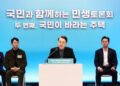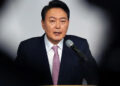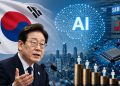
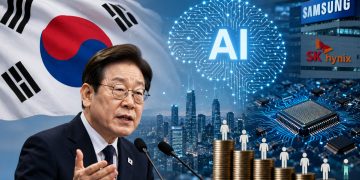

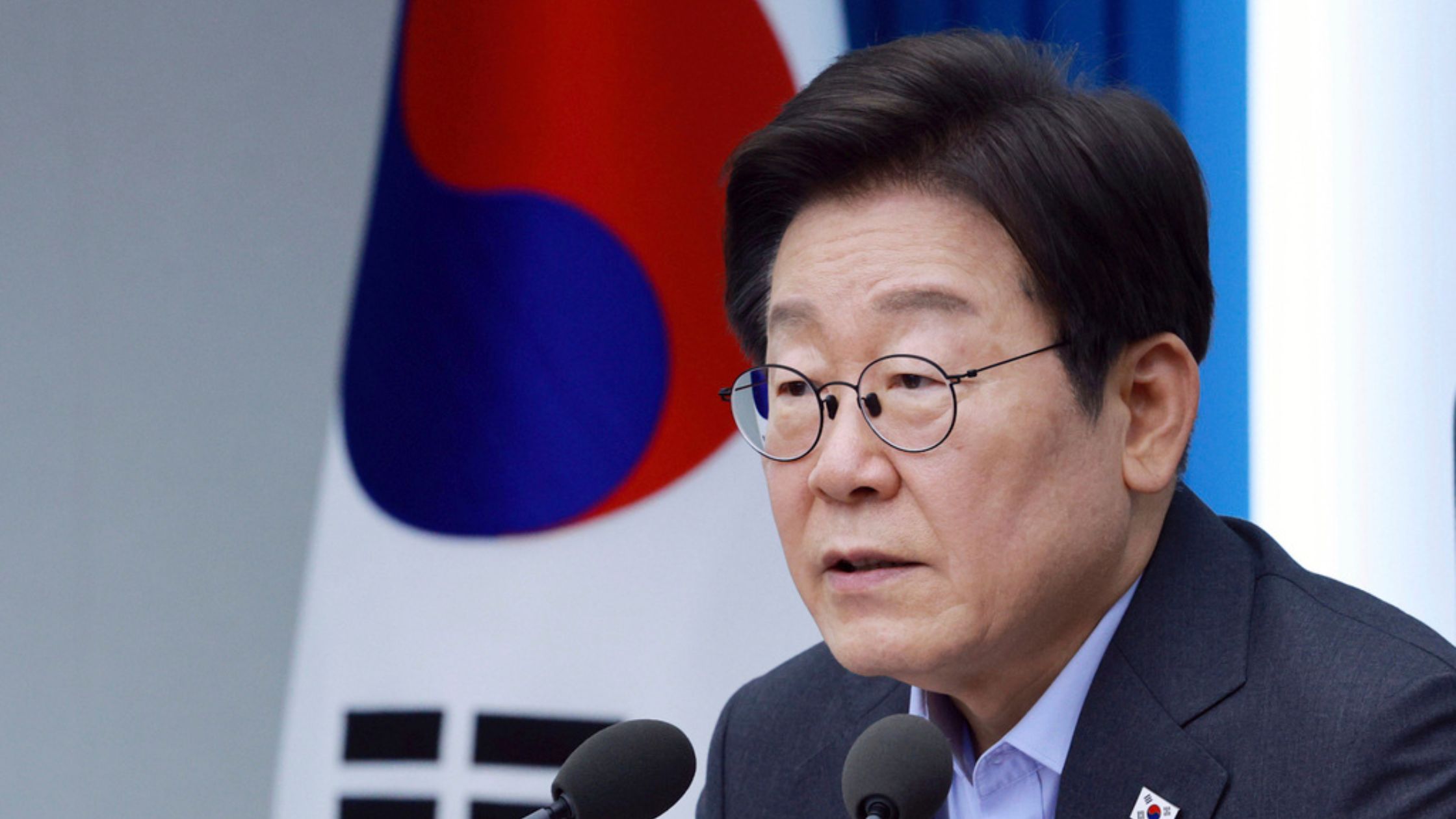
South Korean President Lee Jae-myung on Friday vowed to reinstate the 2018 military agreement with North Korea aimed at easing tensions along the border. Speaking at an event commemorating the 80th anniversary of Korea’s liberation from Japanese colonial rule, Lee called on Pyongyang to return to dialogue and rebuild mutual trust. He emphasized that his administration would pursue steady measures to reduce hostilities and revive inter-Korean cooperation.

The pledge comes amid heightened tensions driven by North Korean leader Kim Jong Un’s advancing nuclear program and closer ties with Russia over the war in Ukraine. The September 19 Comprehensive Military Agreement, signed in 2018, suspended certain military activities along the heavily fortified border, but its implementation has since faltered as relations deteriorated.
The September 19 Military Agreement was first reached during a rare period of diplomacy in 2018 between then-President Moon Jae-in and North Korean leader Kim Jong Un. It created buffer zones on land and sea, along with no-fly areas above the border, to reduce the risk of accidental clashes. The accord also restricted certain military drills, prohibited live-fire exercises in sensitive areas, and required the dismantling of some guard posts in the Demilitarized Zone (DMZ).
The deal began to unravel in late 2023 when Pyongyang withdrew from it after Seoul objected to the North’s launch of a military spy satellite. Tensions escalated further in 2024 when South Korea’s conservative government under Yoon Suk Yeol suspended the pact entirely, citing incidents such as North Korea sending balloons filled with trash across the border. In response, both sides resumed military activities near the frontier, and the North reinstalled weapons and guard posts inside the DMZ.
In his televised address, President Lee reaffirmed his government’s respect for North Korea’s current political system and rejected any pursuit of “unification by absorption.” He stressed that Seoul would not engage in hostile acts and that the focus should be on preventing armed incidents and restoring military trust. Lee also reiterated his administration’s commitment to the international goal of denuclearising North Korea, even while acknowledging that the process would be long and complex.
Since taking office in June following Yoon’s removal, Lee has moved quickly to reverse several hardline policies toward Pyongyang. His government halted the use of loudspeakers that broadcast anti-North propaganda and K-pop across the border, and activists have been discouraged from sending anti-regime leaflets into the North. South Korea also began dismantling its border loudspeaker systems earlier this month, claiming that Pyongyang was doing the same — an assertion North Korea later denied.
North Korea’s reaction to Lee’s overtures has so far been dismissive. Kim Yo Jong, the influential sister of Kim Jong Un, accused Seoul of misleading the public and embellishing its policy toward the North. She stated that North Korea had not removed any of its own loudspeakers and reiterated that Pyongyang had no intention of returning to talks with either Seoul or Washington, citing upcoming South Korea–US military drills as proof of continued hostility.
Lee argued that the peninsula’s decades-long hostility benefits neither side and called for moving beyond “Cold War confrontation” to achieve a lasting peace. He urged Pyongyang to reciprocate Seoul’s gestures and resume communication channels that have long been dormant. However, experts in South Korea remain sceptical, with some predicting that the North will ignore or even ridicule Lee’s approach unless it is paired with significant incentives, such as the easing of international sanctions.
The president’s remarks also touched on regional diplomacy. Lee said relations with Japan should be “forward-looking” and based on pragmatic cooperation in Seoul’s national interest. He is scheduled to visit Tokyo on August 23 for a summit with Prime Minister Shigeru Ishiba, with both leaders expected to discuss security concerns, historical disputes, and the impact of new US tariffs announced by President Donald Trump.
Image credits: Yonhap