
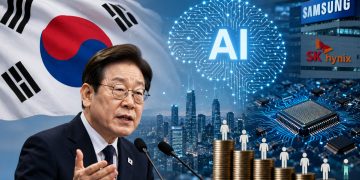
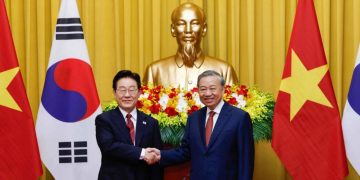

Newly elected South Korean President Lee Jae-myung has decided not to attend the NATO Summit in The Hague on June 24–25, citing unrest in the Middle East and urgent domestic matters. The decision comes just weeks after his June 3 election win and amid rising tensions following U.S. airstrikes on three Iranian nuclear sites, part of a broader Israeli military campaign that began on June 13.

President Lee’s absence from the NATO gathering, which typically includes key Indo-Pacific partners such as Japan and South Korea, highlights the growing strains in relations with Washington. His office confirmed that National Security Adviser Wi Sung-lac would represent South Korea instead as regional instability and changing diplomatic priorities take center stage.
Frustration with Washington appears to have played a key role in both President Lee Jae-myung’s and Japanese Prime Minister Shigeru Ishiba’s decisions to skip the NATO Summit. Ishiba canceled his trip just days after Tokyo suspended the annual “2+2” security talks with the U.S. following disagreements over defense spending. Washington’s push for Japan to commit 5% of its GDP to defense — more than double Tokyo’s target — has stirred tensions. South Korea, too, has faced increasing pressure from the Trump administration to raise its share of defense costs despite a five-year agreement signed last year.
In South Korea, Lee’s withdrawal from the summit is being seen through multiple lenses. While official statements cited domestic priorities and the unstable situation in the Middle East, others in Lee’s Democratic Party have suggested that his absence reflects discomfort with the recent U.S. strikes on Iranian nuclear facilities. Some aides also pointed to the lack of a guaranteed one-on-one meeting with President Trump, making the trip diplomatically less valuable at this time.
Lee’s decision has triggered mixed reactions at home. Conservative critics argue that skipping such a high-profile gathering at the start of his term could damage Seoul’s global standing. They warn it may send the wrong signal to rivals like China and Russia. But others see it as a calculated move. With conflict spreading in the Middle East and uncertainty surrounding Washington’s next steps, engaging in a major summit now — especially without clear deliverables — could pull South Korea into diplomatic or military commitments it is not ready for.
His move also contrasts sharply with his predecessor, Yoon Suk-yeol, who attended every NATO Summit during his term and actively aligned South Korea with U.S. efforts to counter China. Yoon’s aggressive foreign policy, particularly towards North Korea and Beijing, earned him criticism and ultimately contributed to his impeachment earlier this year. Lee’s decision to skip NATO may signal a broader shift away from hardline alignment with U.S.-led military initiatives and toward a more cautious, independent approach.
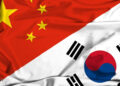
Peace groups in South Korea and beyond welcomed the move. Organizations like No Cold War had urged Lee to avoid the summit, arguing that South Korea’s presence would deepen tensions in the region and support the expansion of a U.S.-led cold war against China. For these groups, Lee’s absence is a sign that his administration may be pursuing a more pragmatic foreign policy — one that seeks balance over confrontation in an increasingly divided world.
The timing of Seoul’s and Tokyo’s summit withdrawals — just as China ended large-scale naval drills near Japan — adds another layer of complexity. It may weaken the U.S. push to tighten its alliances in Asia.
For Washington, this should be a moment of recalibration. Encouraging NATO to set up a liaison office in Japan and constructively addressing concerns over defense spending could help rebuild trust. Most urgently, progress on trade agreements may open the door to broader collaboration on economic security and supply chain resilience.