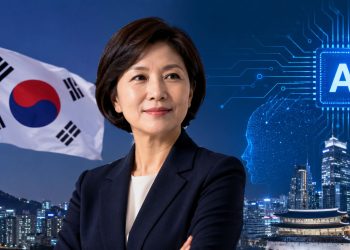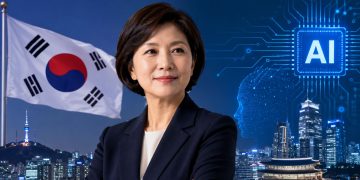



The nomination signals Seoul’s growing push to place artificial intelligence, sovereign digital infrastructure, and technology leadership at the center of national economic strategy.
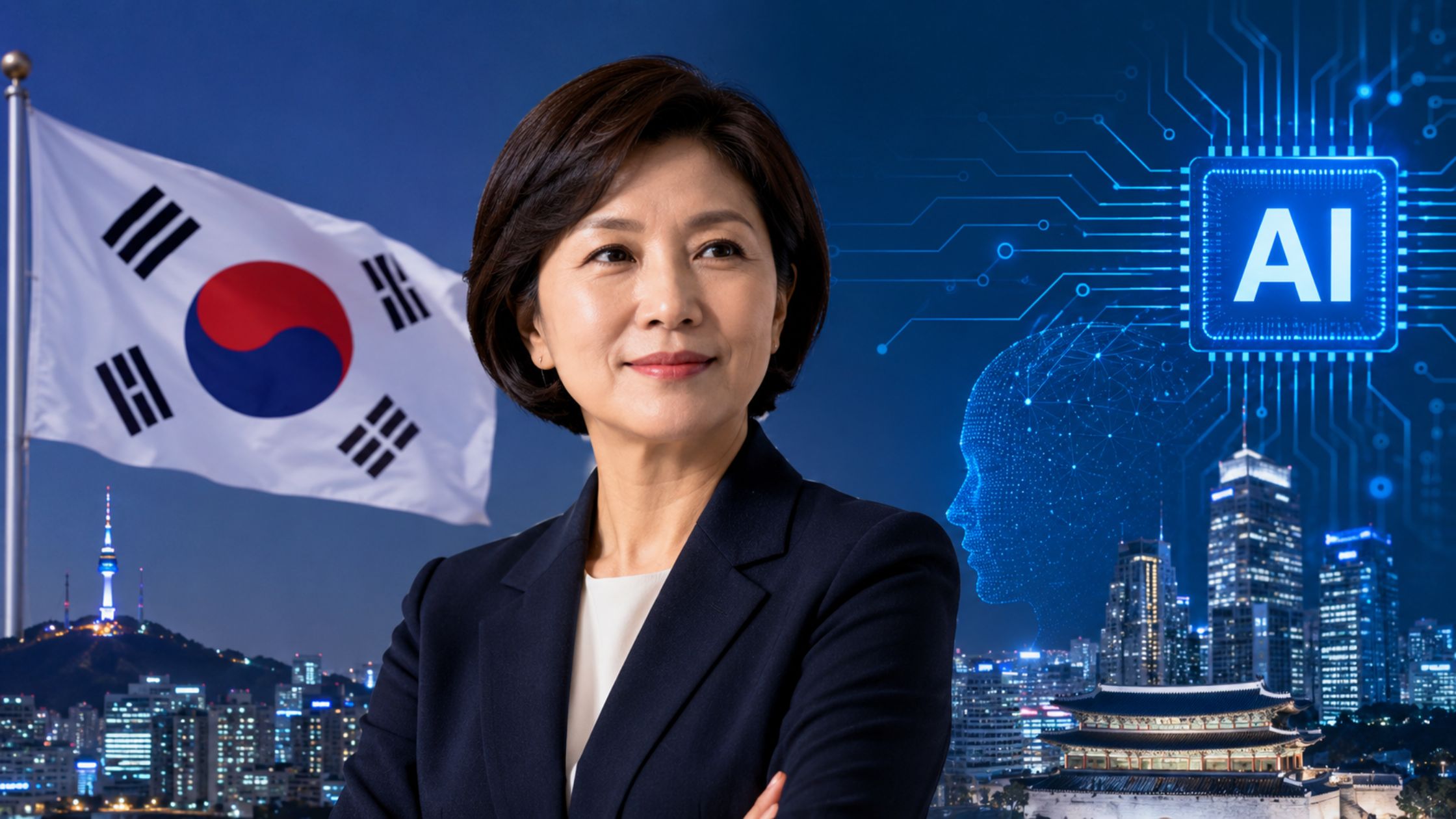
South Korean President Lee Jae Myung’s nomination of former Naver CEO Han Seong-sook as prime minister marks more than a high-profile cabinet reshuffle. It reflects a broader transformation underway in Seoul, where artificial intelligence is increasingly shaping industrial policy, economic planning, labor strategy, and even the composition of government leadership itself.

If confirmed by the National Assembly, Han would become South Korea’s first female prime minister in nearly two decades and only the second woman in the country’s history to hold the post. More importantly for the technology industry, her nomination places one of South Korea’s most influential digital economy executives at the center of national policymaking during a period of intensifying global competition around AI infrastructure, semiconductor capacity, and sovereign technology development.
The appointment signals how aggressively Lee intends to position South Korea around AI-driven growth. Since taking office, the administration has repeatedly emphasized artificial intelligence, semiconductor competitiveness, robotics, cloud infrastructure, and digital transformation as pillars of the country’s long-term economic strategy. Han’s nomination suggests those priorities are no longer confined to the private sector or individual ministries. They are increasingly becoming central to state governance itself.
A Tech Executive at the Center of Government
Unlike many previous prime minister nominees, Han does not come from a traditional political or bureaucratic background. Her career was built inside South Korea’s internet and platform economy, where she emerged as one of the country’s best-known technology leaders. Han joined Naver during the early stages of Korea’s internet expansion and eventually rose to become chief executive officer of the company in 2017. During her tenure, Naver accelerated investments in artificial intelligence, cloud computing, robotics, digital commerce, fintech, and overseas expansion. The company also strengthened its global partnerships and pushed deeper into markets beyond Korea, including Europe and the Middle East.
Her leadership became particularly important as South Korea sought to develop domestic AI capabilities capable of competing with U.S. and Chinese technology ecosystems. Under Han, Naver expanded development of HyperCLOVA, the company’s large language model platform designed specifically around Korean-language data and local digital ecosystems. The initiative became one of the most visible examples of what policymakers and industry leaders increasingly describe as “sovereign AI.”
That concept has gained growing importance in South Korea over the past several years as governments worldwide become more concerned about dependence on foreign AI platforms and infrastructure. For Seoul, the issue extends beyond commercial competition. AI is increasingly viewed as part of national competitiveness, economic security, and long-term technological sovereignty. Lee’s decision to elevate a former Naver executive into one of the country’s most powerful government positions therefore carries symbolic and strategic significance. It suggests the administration views private-sector technology expertise as essential to navigating the next phase of economic transformation.
AI Is Becoming National Industrial Policy
Han’s nomination arrives as South Korea rapidly expands investment in AI infrastructure and next-generation computing capabilities. The government has outlined plans to dramatically increase domestic AI computing power, including large-scale GPU deployment, advanced data center construction, and expanded support for AI cloud services. Officials have repeatedly stated that South Korea intends to become one of the world’s leading AI economies rather than remain dependent on foreign platforms and infrastructure providers.
That ambition is increasingly tied to the country’s semiconductor industry, which sits at the center of the global AI boom. Samsung Electronics and SK hynix have emerged as major beneficiaries of surging demand for advanced memory chips used in AI servers and data centers. AI-related semiconductor exports have strengthened South Korea’s trade outlook and fueled growing expectations that artificial intelligence could become the country’s next major economic growth engine.
Nvidia’s expanding partnerships with Korean companies further underscore South Korea’s growing importance in the global AI ecosystem. Recent agreements involving SK Telecom, SK hynix, Naver Cloud, Hyundai, and LG have positioned Korea as a critical hub for AI infrastructure development across Asia. Naver Cloud recently confirmed plans to collaborate with Nvidia on “AI factory” infrastructure projects aimed at expanding hyperscale AI capabilities globally. Against that backdrop, Han’s nomination appears closely aligned with Lee’s broader effort to integrate industrial policy, AI infrastructure, and economic planning into a unified national strategy.
The Rise of Sovereign AI
One of the most important aspects of Han’s appointment is what it says about South Korea’s approach to sovereign AI development. While much of the global AI market is dominated by American companies such as OpenAI, Google, Microsoft, and Meta, South Korea has pursued a more localized strategy built around domestic firms including Naver, Kakao, LG AI Research, and SK Telecom. The goal is not simply to develop AI products for commercial purposes. South Korea increasingly wants control over:
- AI infrastructure
- language models
- cloud systems
- data governance
- and digital platforms tied to Korean-language ecosystems.
Naver’s HyperCLOVA platform became central to that effort because it was designed using extensive Korean-language datasets and local cultural context. Company executives have argued that sovereign AI platforms are essential for countries seeking technological independence and competitive digital ecosystems in the AI era. Han’s elevation to prime minister therefore reflects more than confidence in a single executive. It signals that sovereign AI is becoming a core element of South Korea’s economic and geopolitical strategy.
AI Growth and Social Pressure
At the same time, the AI transition is creating new political and economic pressures for the Lee administration. South Korea has recently witnessed growing public debate around how the gains generated by the AI boom should be distributed across society. Discussions involving AI-related tax revenues, semiconductor windfalls, and labor compensation have intensified as major technology companies post stronger earnings tied to global AI demand. The government also faces mounting concerns surrounding automation, labor displacement, inequality, and regulatory oversight. South Korea’s rapidly aging population and slowing domestic growth add further pressure to ensure AI-driven economic expansion benefits a broader portion of society rather than concentrating gains among a small group of technology firms. Those tensions are likely to shape Han’s tenure if confirmed.
Although her private-sector experience is widely viewed as an advantage, critics may question whether a technology executive can effectively navigate South Korea’s polarized political environment and manage competing interests involving labor unions, regulators, startups, large conglomerates, and public institutions.
The administration will also face difficult decisions around AI governance, competition policy, data protection, and workforce adaptation as artificial intelligence becomes more deeply integrated across industries.
A New Model of Leadership
Han’s nomination ultimately reflects a larger global trend in which governments are increasingly bringing technology executives and AI specialists into senior policymaking roles. For South Korea, however, the shift appears particularly significant because of how closely AI is becoming tied to the country’s economic identity. The convergence of semiconductors, digital platforms, cloud infrastructure, and sovereign AI development is reshaping not only corporate strategy but also the structure of government itself.
Lee’s decision to place a former Naver executive at the center of national leadership suggests Seoul believes technological competitiveness can no longer be separated from governance, industrial policy, or national strategy. That may become one of the defining characteristics of South Korea’s next phase of economic development. As countries worldwide race to secure leadership in artificial intelligence, South Korea appears to be making a clear statement about how it intends to compete: by embedding AI expertise directly into the highest levels of government and aligning national policy around long-term technological transformation.