


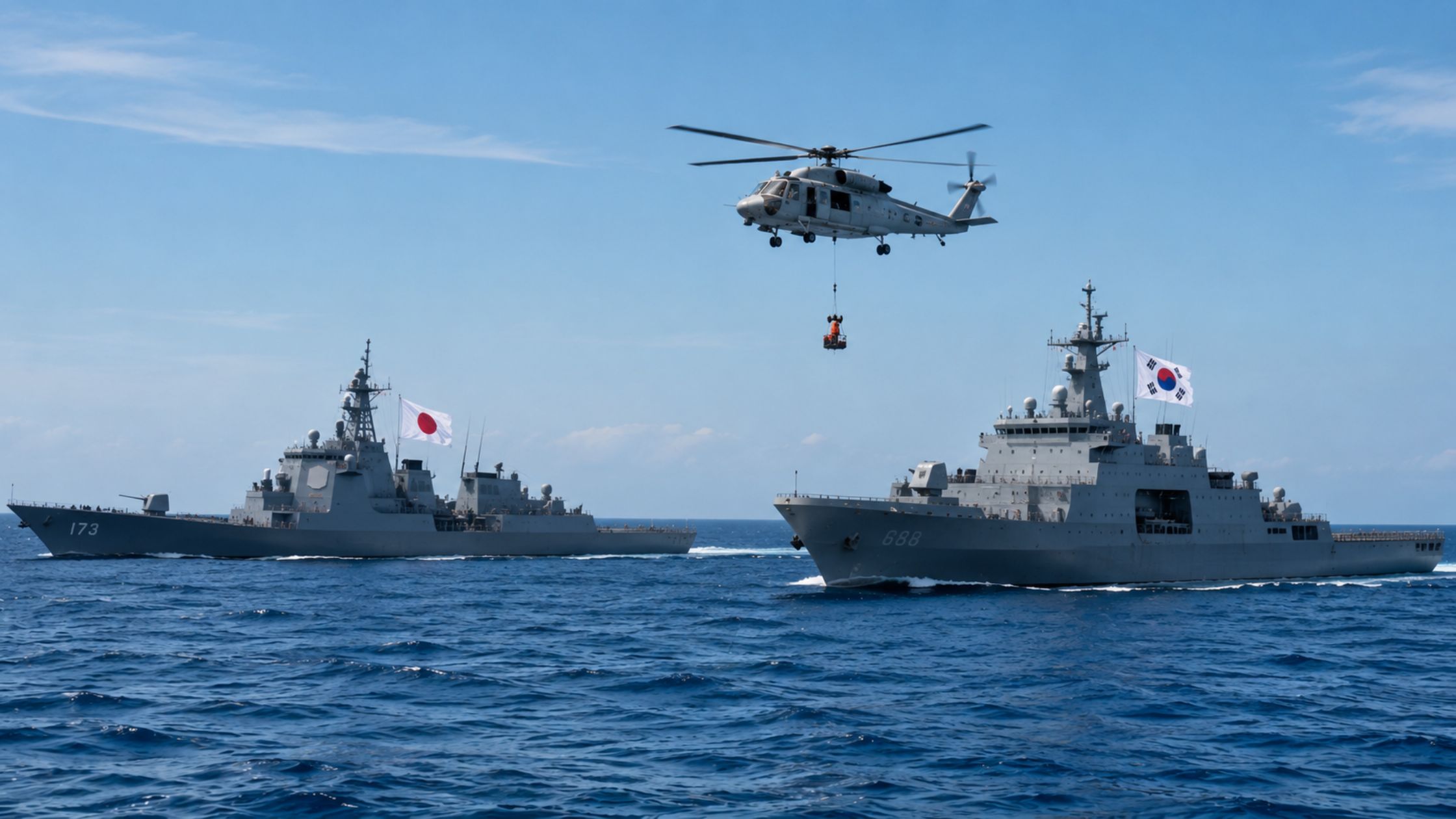
South Korea and Japan agree to expand military exchanges as both countries strengthen security coordination amid growing regional challenges.
Japan and South Korea have agreed to expand defense exchanges and resume joint maritime search-and-rescue exercises for the first time in nearly a decade, marking another step in the continued improvement of security ties between the two U.S. allies.

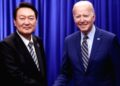
The agreement was reached during talks between South Korean Defense Minister Ahn Gyu-back and Japanese Defense Minister Shinjiro Koizumi on the sidelines of the Shangri-La Dialogue in Singapore, one of Asia’s leading defense and security forums. The two sides confirmed plans to conduct a joint maritime search-and-rescue exercise on June 7, the first such drill between the countries in nine years.
The exercise carries significance beyond its humanitarian purpose, reflecting a broader effort by Seoul and Tokyo to rebuild defense cooperation after years of political and military tensions.
“The resumption of the drills after nine years carries significant symbolic importance,” Ahn said during the meeting, according to South Korea’s Defense Ministry.
The search-and-rescue exercise, known as SAREX, was first launched in 1999 and had been conducted regularly to strengthen coordination between the South Korean Navy and the Japan Maritime Self-Defense Force in responding to maritime emergencies near the Korean Peninsula. The drills were suspended after bilateral relations deteriorated following a military dispute in late 2018.
The dispute centered on conflicting accounts involving a South Korean naval vessel and a Japanese patrol aircraft. Japan accused a South Korean destroyer of directing fire-control radar at one of its patrol aircraft, an allegation Seoul denied. South Korea, in turn, criticized the Japanese aircraft for conducting what it described as a threatening low-altitude flyby near one of its vessels. The incident became one of the most serious defense-related confrontations between the two countries in recent years and contributed to the suspension of several military exchanges.
The latest agreement builds on a broader improvement in bilateral relations since 2023, when Seoul and Tokyo began repairing ties strained by historical disputes, trade tensions, and security disagreements. Since then, the two countries have expanded intelligence-sharing, resumed high-level security consultations, and increased trilateral cooperation with the United States.
Defense cooperation has increasingly become a central pillar of that rapprochement as regional security concerns continue to intensify.
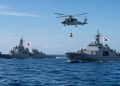
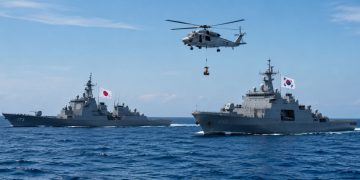
According to South Korea’s Navy, the June 7 exercise will take place in international waters southeast of Jeju Island and involve multiple maritime emergency-response scenarios, including search-and-rescue operations, firefighting procedures, emergency medical support, and helicopter operations. South Korea plans to deploy the 4,900-ton Cheon Ja Bong landing ship, while Japan will participate with a 7,250-ton Kongo-class Aegis destroyer and an SH-60K maritime helicopter.
The ministers also discussed expanding military-to-military exchanges and maintaining close communication between their armed forces.
Ahead of the talks, Ahn described the growing frequency of bilateral defense meetings as a form of “ping-pong diplomacy,” referring to the increasingly regular exchanges between officials from both countries. Koizumi emphasized that stronger defense cooperation was driven not simply by goodwill but by shared security challenges facing both nations.
“To promote peace and stability in the Indo-Pacific region, it is important for Japan and South Korea to take a leading role,” Koizumi said during the meeting, highlighting the importance of cooperation alongside the U.S.-Japan and U.S.-South Korea alliances.
The discussions also touched on a potential military logistics support agreement that would allow the two countries to share fuel, food, transportation, ammunition, and other logistical support during exercises and operations. While both sides acknowledged the potential benefits of such cooperation, South Korea emphasized the political sensitivity of any agreement involving deeper military coordination due to historical concerns surrounding Japan’s colonial rule of the Korean Peninsula.
The latest developments underscore how shifting regional security dynamics are encouraging closer coordination among U.S. allies in Asia.
North Korea’s advancing missile and nuclear programs, growing military activity across the Indo-Pacific, and broader geopolitical competition have pushed Seoul and Tokyo toward deeper strategic cooperation despite lingering historical sensitivities. Analysts say the restoration of regular military exchanges could improve operational coordination, strengthen regional deterrence, and support broader security partnerships involving the United States.
The agreement reached in Singapore reflects the continued expansion of defense cooperation between Japan and South Korea as both countries seek closer coordination in response to evolving regional security challenges. As tensions across the Indo-Pacific continue to reshape defense priorities, the revival of joint military activities signals a new phase in the relationship between Seoul and Tokyo—one increasingly focused on practical security cooperation and regional stability.