
• Home
  • Politics
  • Society
KoreaToday
  • Home
  • Politics
    The ‘Jang Bogo N’ Project: Inside South Korea’s Push for Nuclear Submarines and Defense Autonomy

    The ‘Jang Bogo N’ Project: Inside South Korea’s Push for Nuclear Submarines and Defense Autonomy

    Seoul, Tokyo Expand Defense Cooperation with First Joint Search-and-Rescue Drill in Nine Years

    Seoul, Tokyo Expand Defense Cooperation with First Joint Search-and-Rescue Drill in Nine Years

    AI Windfall vs. Labor Rights: President Lee and ILO Chief Tackle the Future of Work

    AI Windfall vs. Labor Rights: President Lee and ILO Chief Tackle the Future of Work

    South Korea’s Lee Clarifies AI Dividend Remarks Amid Debate Over Sharing Tech Wealth

    South Korea’s Lee Clarifies AI Dividend Remarks Amid Debate Over Sharing Tech Wealth

    Seoul and Hanoi Deepen Economic Alignment with Wave of New Deals

    Seoul and Hanoi Deepen Economic Alignment with Wave of New Deals

    Gaza War Discourse Draws South Korea Into Diplomatic Friction with Israel

    Gaza War Discourse Draws South Korea Into Diplomatic Friction with Israel

  • Society
No Result
View All Result
  • Home
  • Politics
    The ‘Jang Bogo N’ Project: Inside South Korea’s Push for Nuclear Submarines and Defense Autonomy

    The ‘Jang Bogo N’ Project: Inside South Korea’s Push for Nuclear Submarines and Defense Autonomy

    Seoul, Tokyo Expand Defense Cooperation with First Joint Search-and-Rescue Drill in Nine Years

    Seoul, Tokyo Expand Defense Cooperation with First Joint Search-and-Rescue Drill in Nine Years

    AI Windfall vs. Labor Rights: President Lee and ILO Chief Tackle the Future of Work

    AI Windfall vs. Labor Rights: President Lee and ILO Chief Tackle the Future of Work

    South Korea’s Lee Clarifies AI Dividend Remarks Amid Debate Over Sharing Tech Wealth

    South Korea’s Lee Clarifies AI Dividend Remarks Amid Debate Over Sharing Tech Wealth

    Seoul and Hanoi Deepen Economic Alignment with Wave of New Deals

    Seoul and Hanoi Deepen Economic Alignment with Wave of New Deals

    Gaza War Discourse Draws South Korea Into Diplomatic Friction with Israel

    Gaza War Discourse Draws South Korea Into Diplomatic Friction with Israel

  • Society
No Result
View All Result
KoreaToday
No Result
View All Result
Home Politics

South Korea Downplays Security Risks as U.S. Considers Redeploying Air Defence Systems

Steve Cervantes by Steve Cervantes
March 25, 2026
in Politics, South Korean President
0
South Korea Downplays Security Risks as U.S. Considers Redeploying Air Defence Systems
0
SHARES
13
VIEWS
Share on FacebookShare on Twitter

President Lee Jae Myung says deterrence against North Korea remains intact, even as concerns grow over shifting U.S. military priorities


South Korean President Lee Jae Myung has sought to reassure domestic and regional audiences that the country’s security posture remains stable, even as the United States considers redeploying air defence assets from the Korean Peninsula to the Middle East. Speaking on Tuesday, Lee said South Korea retains sufficient capability to deter North Korea despite potential adjustments in U.S. force deployment.

His remarks come amid reports that Washington is reviewing the placement of key missile defence systems, including assets currently stationed in South Korea, as part of its response to rising tensions involving Iran. The possibility of such a shift has prompted concern about whether U.S. strategic focus is being stretched across multiple regions.

Lee acknowledged that Seoul has expressed opposition to the transfer of U.S. Forces Korea (USFK) air defence systems but admitted that South Korea has limited leverage over such decisions. He noted that U.S. deployments are ultimately determined by Washington’s global military priorities.

This reflects a structural reality within the alliance. While South Korea hosts significant U.S. forces and benefits from extended deterrence, operational decisions regarding those assets remain under U.S. control. The situation highlights an inherent asymmetry in the alliance, particularly when U.S. global commitments intersect with regional security concerns.

Deterrence Framed Around Domestic Strength

Despite these concerns, Lee emphasised that South Korea’s own military capabilities provide a strong foundation for deterrence. He pointed to the country’s high defence spending and global military ranking, arguing that the gap in conventional power between South Korea and North Korea remains substantial.

At the same time, Lee acknowledged the challenge posed by North Korea’s nuclear weapons but maintained that conventional superiority still plays a decisive role in maintaining stability. His comments reflect an ongoing effort by Seoul to balance reliance on U.S. support with greater emphasis on self-reliant defence.

Lee’s call to prepare for scenarios without external support signals a broader policy direction. As geopolitical uncertainty increases, South Korea appears to be placing more focus on strengthening its independent defence capabilities.

This does not suggest a shift away from the alliance with the United States, but rather an adjustment in how that alliance is complemented. Greater self-reliance is increasingly seen as necessary in an environment where U.S. military resources are being stretched across multiple theatres.

Middle East Tensions Driving U.S. Decisions

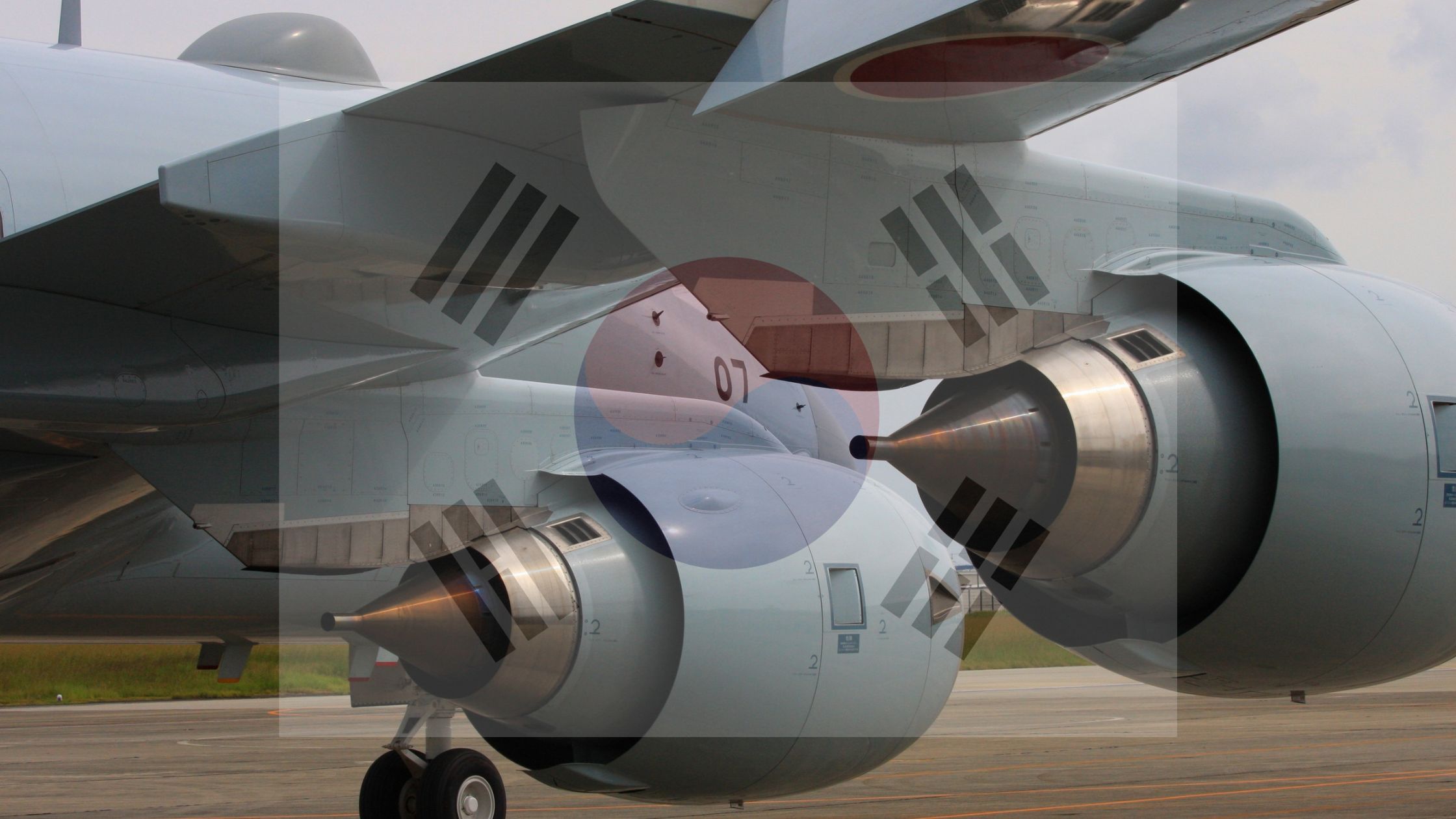
The potential redeployment of U.S. air defence assets from South Korea is closely linked to rising security pressures in the Middle East. As tensions involving Iran escalate, Washington is seeking to strengthen its ability to intercept missiles and drones targeting its forces and regional partners. This has increased demand for systems such as the Terminal High Altitude Area Defense (THAAD) and Patriot batteries, which are designed to counter aerial and ballistic threats.

These systems are not permanently fixed and are often repositioned based on operational urgency. In the current context, the U.S. appears to be shifting assets from relatively stable regions, including the Korean Peninsula, to areas facing more immediate risks. This reflects a broader allocation strategy where limited, high-value defence systems are deployed where they are most needed.

Recent developments point to multiple indicators of such a shift:

  • Increased movement of U.S. military transport aircraft, including C-5 and C-17 planes, at Osan Air Base
  • Reports of THAAD and Patriot components being reassigned to the Middle East
  • Growing demand for missile defence systems as regional conflicts intensify

These signals suggest that logistical preparations for redeployment are already underway, even if official confirmations remain limited.

Taken together, the situation highlights how security developments in one region can directly influence military positioning in another. For South Korea, this creates a more complex security environment, where local defence considerations are increasingly shaped by global strategic demands.

Strain on U.S. Global Military Posture

Analysts say the situation reflects broader pressure on U.S. military resources. As Washington responds to multiple security challenges, including tensions in the Middle East and strategic competition in Asia, it faces difficult decisions about how to allocate critical assets.

The redeployment of air defence systems from South Korea suggests that even long-standing security commitments may be adjusted in response to immediate operational needs. This raises questions about how the U.S. balances its role as a global security provider.

Impact on the Korean Peninsula

Security experts have largely assessed that the immediate impact on deterrence against North Korea will be limited. Core operational plans remain unchanged, and South Korea continues to maintain its own advanced missile defence systems.

However, U.S. systems still form a key layer of the peninsula’s defence architecture. Their partial withdrawal, even if temporary, could affect how both allies and adversaries perceive the strength and consistency of the alliance.

Beyond operational considerations, the redeployment carries symbolic weight. It may reinforce perceptions that the United States is prioritising other regions over Asia, even if the underlying alliance commitments remain intact.

For South Korea, managing this perception is as important as maintaining actual defence capabilities. Lee’s remarks appear aimed at containing uncertainty while reinforcing confidence in both national strength and the alliance framework.

The debate over U.S. redeployment of air defence assets highlights a shifting strategic environment in which regional security is increasingly shaped by global dynamics. While South Korea’s leadership has sought to project stability, the episode underscores the interconnected nature of modern defence planning.

As the United States recalibrates its military posture, South Korea faces the parallel task of strengthening its own capabilities while adapting to a more fluid alliance structure.

Tags: International RelationsSouth Korean PresidentUS
Previous Post

South Korea Charges Men Linked to Myanmar Scam Hub, Exposing Evolving Cross-Border Fraud Networks

Next Post

South Korea Laced Drink Case Points to Wider Pattern as Victim Count Rises

Steve Cervantes

Steve Cervantes

I am an international consultant and journalist with extensive experience of 15 years in Korea. Currently, I am residing in Southeast Asia, where I continue to provide my expertise and services

Next Post
South Korea Laced Drink Case Points to Wider Pattern as Victim Count Rises

South Korea Laced Drink Case Points to Wider Pattern as Victim Count Rises

Leave a Reply Cancel reply

Your email address will not be published. Required fields are marked *

Stay Connected

  • 24k Followers
  • 99 Subscribers
  • Trending
  • Comments
  • Latest
South Korea’s Low Birth Rate Sparks National Emergency Declaration by Yoon

South Korea’s Low Birth Rate Sparks National Emergency Declaration by Yoon

June 19, 2024
Singapore and South Korea Expand Bilateral Cooperation with AI, Defense, and Trade Initiatives

Singapore and South Korea Expand Bilateral Cooperation with AI, Defense, and Trade Initiatives

October 9, 2024
President Yoon Suk Yeol Unveils Bold Housing Reforms to Tackle Supply Shortage

President Yoon Suk Yeol Unveils Bold Housing Reforms to Tackle Supply Shortage

January 17, 2024
President Yoon Seok-yeol Proposed Higher Education Reforms South Korea Universities

Yoon Seok-yeol’s Proposed Higher Education Reforms: Are They Enough to Make Meaningful Changes or Just Lip Service?

July 29, 2023
President Yoon Seok-yeol Proposed Higher Education Reforms South Korea Universities

Yoon Seok-yeol’s Proposed Higher Education Reforms: Are They Enough to Make Meaningful Changes or Just Lip Service?

0
china and south korea diplomatic relations dispute

The Diplomatic Dispute between China and South Korea has Unfolded in Unique Circumstances

0
South Korean President Yoon Seok-yeol To Join Biden and Kishida at Camp David Summit

South Korean President Yoon Seok-yeol To Join Biden and Kishida at Camp David Summit

0
South Korea Joins Global Partners for Ukraine’s Peace and Reconstruction

South Korea Joins Global Partners for Ukraine’s Peace and Reconstruction

0
The ‘Jang Bogo N’ Project: Inside South Korea’s Push for Nuclear Submarines and Defense Autonomy

The ‘Jang Bogo N’ Project: Inside South Korea’s Push for Nuclear Submarines and Defense Autonomy

June 1, 2026
Seoul, Tokyo Expand Defense Cooperation with First Joint Search-and-Rescue Drill in Nine Years

Seoul, Tokyo Expand Defense Cooperation with First Joint Search-and-Rescue Drill in Nine Years

May 31, 2026
AI Windfall vs. Labor Rights: President Lee and ILO Chief Tackle the Future of Work

AI Windfall vs. Labor Rights: President Lee and ILO Chief Tackle the Future of Work

May 31, 2026
South Korea’s Lee Clarifies AI Dividend Remarks Amid Debate Over Sharing Tech Wealth

South Korea’s Lee Clarifies AI Dividend Remarks Amid Debate Over Sharing Tech Wealth

May 31, 2026

Recent News

The ‘Jang Bogo N’ Project: Inside South Korea’s Push for Nuclear Submarines and Defense Autonomy

The ‘Jang Bogo N’ Project: Inside South Korea’s Push for Nuclear Submarines and Defense Autonomy

June 1, 2026
Seoul, Tokyo Expand Defense Cooperation with First Joint Search-and-Rescue Drill in Nine Years

Seoul, Tokyo Expand Defense Cooperation with First Joint Search-and-Rescue Drill in Nine Years

May 31, 2026
AI Windfall vs. Labor Rights: President Lee and ILO Chief Tackle the Future of Work

AI Windfall vs. Labor Rights: President Lee and ILO Chief Tackle the Future of Work

May 31, 2026
South Korea’s Lee Clarifies AI Dividend Remarks Amid Debate Over Sharing Tech Wealth

South Korea’s Lee Clarifies AI Dividend Remarks Amid Debate Over Sharing Tech Wealth

May 31, 2026
  • Home

No Result
View All Result
  • Home
  • Politics
  • Society