



Seoul positions itself as a development and climate partner as Pacific leaders warn of rising sea levels and long-term economic risks
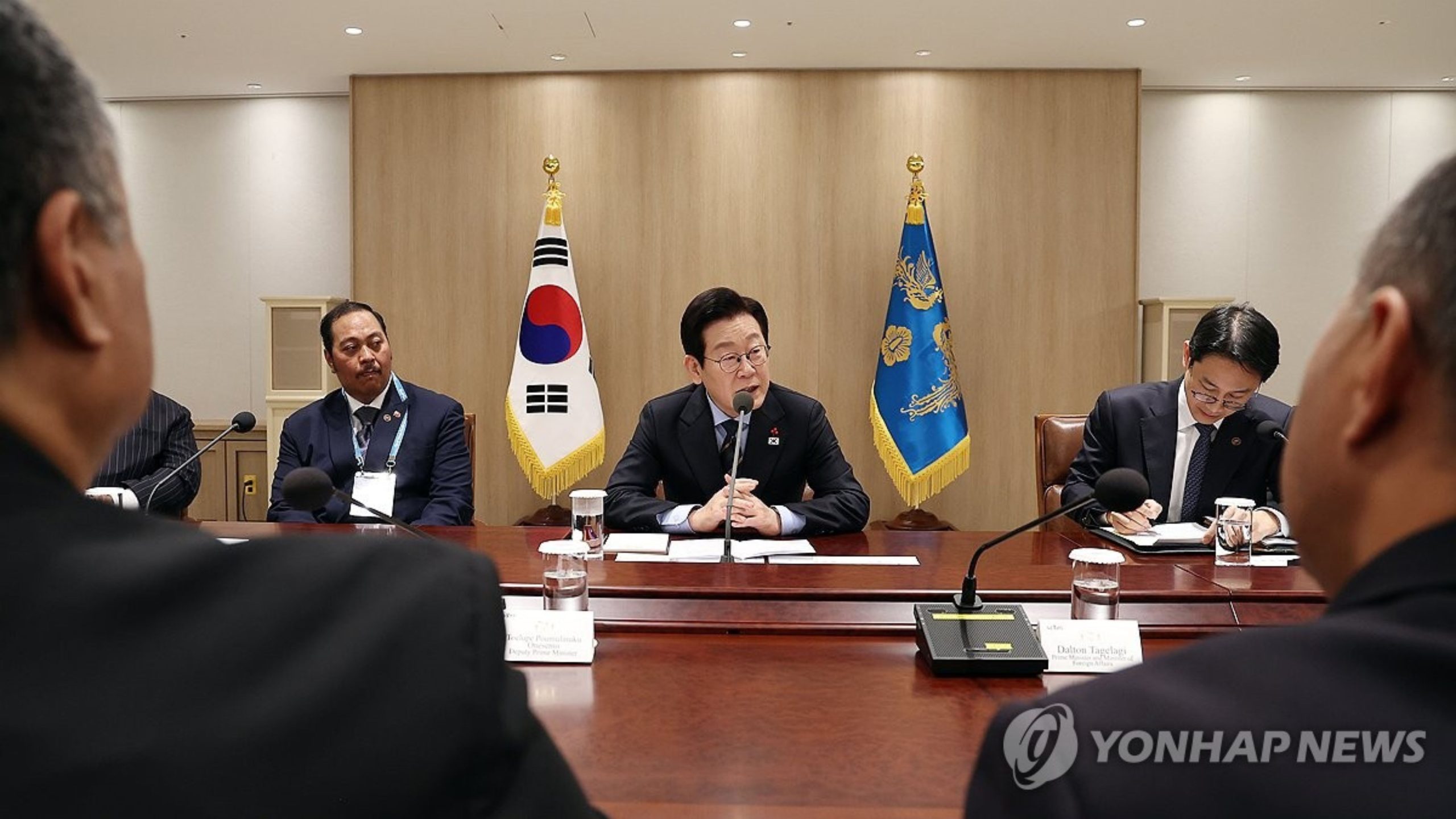
South Korean President Lee Jae Myung on Wednesday pledged to deepen cooperation on climate change with Pacific Island nations, for Seoul’s intent to play a more active role in supporting regions most exposed to environmental risks. His remarks came during talks in Seoul with foreign ministers from Pacific Island countries, marking a renewed diplomatic focus on climate vulnerability and sustainable growth.

The meeting brought together senior diplomats from 15 Pacific Island nations and the secretary general of the Pacific Islands Forum, who are in South Korea for the sixth Korea–Pacific Islands foreign ministers’ meeting. According to local media, discussions extended beyond climate action to include broader global and regional challenges where cooperation is seen as increasingly urgent.
Climate Change as a Shared Security Issue
Lee described climate change as a “shared crisis,” noting that Pacific Island countries face some of the earliest and most severe consequences of rising sea levels. He said South Korea would respond proactively, drawing on its own development experience to help vulnerable nations pursue self-sustaining growth and long-term resilience rather than short-term aid.
Pacific Island governments have consistently placed climate change at the top of their foreign policy agendas. Low-lying islands face growing risks to coastlines, infrastructure, freshwater supplies and livelihoods, with some regions expected to experience sharply higher tidal flooding by the 2050s. Leaders across the Pacific have warned that climate change represents an existential threat, not a distant environmental concern.
Joint Statement Sets Policy Direction
A day before Lee’s meeting, South Korea and Pacific Island nations adopted a joint statement at the ministerial talks, committing to closer cooperation on climate change and environmental protection. The agreement also highlighted oceans, maritime affairs and fisheries—sectors central to Pacific economies and directly affected by warming seas and ecological degradation.
The talks were hosted by Foreign Minister Cho Hyun, reflecting Seoul’s effort to elevate Pacific engagement beyond symbolic diplomacy. Officials said the statement provides a framework for practical collaboration, including knowledge sharing, technical support and policy coordination.
Beyond Climate: Economic and Strategic Links
Lee also pointed to South Korea’s expanding strategic and economic ties with the Pacific. He noted Korea’s position as a major tuna market and fisheries hub, while highlighting opportunities to broaden cooperation in mineral resources and energy—areas many Pacific nations view as critical for future development.
These remarks suggest that Seoul sees climate cooperation as part of a wider partnership model, linking environmental support with economic engagement. For Pacific states, such an approach could offer alternatives to reliance on a narrow set of external partners, while for South Korea it aligns climate diplomacy with long-term strategic interests.
A Long-Term Diplomatic Trajectory
South Korea’s engagement with Pacific Island countries has grown steadily since it established diplomatic relations with Tonga in 1970. Officials now describe the region as an increasingly important diplomatic partner, particularly as climate change reshapes priorities across the Indo-Pacific.
Lee welcomed the outcome of the ministerial meeting and stressed the need for continued high-level consultations to translate political commitments into concrete projects. As climate risks intensify, Seoul’s challenge will be to demonstrate that its pledges can deliver tangible support to some of the world’s most climate-exposed nations.