


• Home
  • Politics
  • Society
KoreaToday
  • Home
  • Politics
    The ‘Jang Bogo N’ Project: Inside South Korea’s Push for Nuclear Submarines and Defense Autonomy

    The ‘Jang Bogo N’ Project: Inside South Korea’s Push for Nuclear Submarines and Defense Autonomy

    Seoul, Tokyo Expand Defense Cooperation with First Joint Search-and-Rescue Drill in Nine Years

    Seoul, Tokyo Expand Defense Cooperation with First Joint Search-and-Rescue Drill in Nine Years

    AI Windfall vs. Labor Rights: President Lee and ILO Chief Tackle the Future of Work

    AI Windfall vs. Labor Rights: President Lee and ILO Chief Tackle the Future of Work

    South Korea’s Lee Clarifies AI Dividend Remarks Amid Debate Over Sharing Tech Wealth

    South Korea’s Lee Clarifies AI Dividend Remarks Amid Debate Over Sharing Tech Wealth

    Seoul and Hanoi Deepen Economic Alignment with Wave of New Deals

    Seoul and Hanoi Deepen Economic Alignment with Wave of New Deals

    Gaza War Discourse Draws South Korea Into Diplomatic Friction with Israel

    Gaza War Discourse Draws South Korea Into Diplomatic Friction with Israel

  • Society
No Result
View All Result
  • Home
  • Politics
    The ‘Jang Bogo N’ Project: Inside South Korea’s Push for Nuclear Submarines and Defense Autonomy

    The ‘Jang Bogo N’ Project: Inside South Korea’s Push for Nuclear Submarines and Defense Autonomy

    Seoul, Tokyo Expand Defense Cooperation with First Joint Search-and-Rescue Drill in Nine Years

    Seoul, Tokyo Expand Defense Cooperation with First Joint Search-and-Rescue Drill in Nine Years

    AI Windfall vs. Labor Rights: President Lee and ILO Chief Tackle the Future of Work

    AI Windfall vs. Labor Rights: President Lee and ILO Chief Tackle the Future of Work

    South Korea’s Lee Clarifies AI Dividend Remarks Amid Debate Over Sharing Tech Wealth

    South Korea’s Lee Clarifies AI Dividend Remarks Amid Debate Over Sharing Tech Wealth

    Seoul and Hanoi Deepen Economic Alignment with Wave of New Deals

    Seoul and Hanoi Deepen Economic Alignment with Wave of New Deals

    Gaza War Discourse Draws South Korea Into Diplomatic Friction with Israel

    Gaza War Discourse Draws South Korea Into Diplomatic Friction with Israel

  • Society
No Result
View All Result
KoreaToday
No Result
View All Result
Home National Issue

South Korea Pushes for Sweeping Constitutional Reform Under President Lee Jae-myung

developer by developer
September 26, 2025
in National Issue, Politics, South Korean President
0
South Korea Pushes for Sweeping Constitutional Reform Under President Lee Jae-myung
0
SHARES
16
VIEWS
Share on FacebookShare on Twitter

Lee’s administration unveils 123 national policy tasks with constitutional changes at the center, raising hopes for stability but also fears of extended one-party dominance.

South Korean President Lee Jae-myung has placed constitutional reform at the heart of his administration’s political agenda, seeking to revise a system that has remained largely untouched since 1987. At a Cabinet meeting on September 16, his government confirmed a package of 123 national policy tasks, with the proposal to allow presidents to serve two consecutive four-year terms emerging as the top priority.

The plan would replace the single five-year term currently in place, a framework long criticized for concentrating excessive power in the executive office and fueling political instability. Supporters of the reform argue that shortening the presidential mandate while allowing for reelection would ensure greater accountability and continuity in governance.

Lee assumed office in June following the impeachment of his predecessor, Yoon Suk Yeol, who declared martial law in late 2024 in a move widely condemned as unconstitutional. That crisis, along with repeated power struggles under the existing system, has sharpened calls for reform.

According to Lee, the Constitution of 1987, born out of South Korea’s transition from military rule to democracy, is now outdated. He argues that its flaws—including over-concentration of presidential powers—have contributed to recurrent crises and weakened the balance among institutions.

Alongside the proposed changes to term limits, the Lee administration is pushing for reforms to reduce the authority of prosecutors to launch investigations, a move strongly supported by the ruling Democratic Party.

The Question of Lee’s Own Eligibility

One of the most contentious issues is whether the reform would allow Lee himself to seek reelection. Article 128 of the Constitution explicitly states that amendments extending presidential terms cannot apply to the sitting president. However, as this article itself could be subject to revision, the opposition People Power Party (PPP) has accused the government of creating a pathway for Lee to extend liberal rule beyond his current mandate, which ends in 2030.

This ambiguity has already become a flashpoint in political debate, raising questions about whether the reform effort is a genuine attempt to modernize governance or a strategic maneuver to consolidate power.

Introducing a Runoff Presidential System

The reform blueprint also proposes introducing a two-round presidential election system. If no candidate wins an outright majority in the first round, the top two contenders would face off in a runoff. Proponents argue this system would enhance democratic legitimacy and reduce the risks of minority-backed presidents taking office under the current single-round format.

Critics, however, warn that the system could heighten polarization by forcing voters into stark binary choices in the second round.

Legislative and Referendum Hurdles

For the reforms to materialize, the National Assembly must first approve them with a two-thirds majority. Given the Democratic Party’s current control, this step appears feasible, though it would still require cross-party negotiations.

The final hurdle would be a national referendum. For constitutional changes to pass, more than 50 percent of voters must support them, and at least half of eligible voters must participate. The referendum could be scheduled alongside either the 2026 local elections or the 2028 parliamentary elections.

Beyond Term Limits: Curtailing Presidential Power

The Lee administration’s vision extends beyond term reform. The blueprint suggests reducing the president’s veto power over parliamentary bills, granting the National Assembly authority to recommend prime minister candidates, and enhancing legislative oversight over emergency decrees and martial law declarations.

These measures are framed as safeguards against the abuse of presidential powers, especially in the aftermath of Yoon Suk Yeol’s controversial martial law declaration. If enacted, they could mark a significant shift toward a more parliamentary-influenced system of governance.

Five National Goals Driving Policy

The government’s broader agenda, presented under the slogan “A nation where the people rule, a Republic of Korea where everyone is happy,” outlines five national goals:

  1. Political Unity – Building consensus-driven politics and preventing institutional crises.
  2. Innovative Economy – Positioning South Korea as a global leader in artificial intelligence and biotechnology.
  3. Balanced Development – Addressing regional inequality and promoting rural support measures.
  4. Stronger Social Foundations – Tackling industrial safety, pensions, and demographic challenges.
  5. Diplomacy and Security – Strengthening deterrence against North Korea while promoting reconciliation and cooperation.

Economic Transformation at the Core

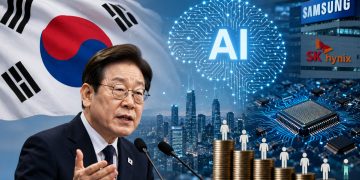
On the economic front, Lee has set ambitious targets to transform South Korea into one of the world’s top three AI powers. His government plans to allocate five percent of the national budget to research and development, build an “AI highway,” and launch a 150 trillion won National Growth Fund to stimulate strategic industries such as semiconductors, secondary batteries, and biohealth.

To address inequality, the plan also includes expanding public housing, restructuring small-business debt, and introducing a basic income program for farming and fishing villages.

Outlook: Reform or Risk?

South Korea has not amended its Constitution in nearly four decades, making Lee’s initiative one of the most ambitious reform projects since democratization. While the proposals aim to modernize governance and curb executive overreach, they also risk deepening partisan conflict.

The uncertainty over Lee’s eligibility for a second term, coupled with the opposition’s concerns about power consolidation, ensures that constitutional reform will remain a polarizing issue. Ultimately, the success of these reforms will depend not only on legislative maneuvering but also on whether they can win the trust of South Korean voters in a national referendum.

Tags: national politicsPoliticsSouth Korean President
Previous Post

South Korea Overturns Six-Decade Conviction of Woman Jailed for Resisting Sexual Assault

Next Post

50-Year-Old Man Arrested for Murder of TikTok Creator in Her 20s

developer

developer

Next Post
50-Year-Old Man Arrested for Murder of TikTok Creator in Her 20s

50-Year-Old Man Arrested for Murder of TikTok Creator in Her 20s

Leave a Reply Cancel reply

Your email address will not be published. Required fields are marked *

Stay Connected

  • 24k Followers
  • 99 Subscribers
  • Trending
  • Comments
  • Latest
South Korea’s Low Birth Rate Sparks National Emergency Declaration by Yoon

South Korea’s Low Birth Rate Sparks National Emergency Declaration by Yoon

June 19, 2024
Singapore and South Korea Expand Bilateral Cooperation with AI, Defense, and Trade Initiatives

Singapore and South Korea Expand Bilateral Cooperation with AI, Defense, and Trade Initiatives

October 9, 2024
President Yoon Suk Yeol Unveils Bold Housing Reforms to Tackle Supply Shortage

President Yoon Suk Yeol Unveils Bold Housing Reforms to Tackle Supply Shortage

January 17, 2024
President Yoon Seok-yeol Proposed Higher Education Reforms South Korea Universities

Yoon Seok-yeol’s Proposed Higher Education Reforms: Are They Enough to Make Meaningful Changes or Just Lip Service?

July 29, 2023
President Yoon Seok-yeol Proposed Higher Education Reforms South Korea Universities

Yoon Seok-yeol’s Proposed Higher Education Reforms: Are They Enough to Make Meaningful Changes or Just Lip Service?

0
china and south korea diplomatic relations dispute

The Diplomatic Dispute between China and South Korea has Unfolded in Unique Circumstances

0
South Korean President Yoon Seok-yeol To Join Biden and Kishida at Camp David Summit

South Korean President Yoon Seok-yeol To Join Biden and Kishida at Camp David Summit

0
South Korea Joins Global Partners for Ukraine’s Peace and Reconstruction

South Korea Joins Global Partners for Ukraine’s Peace and Reconstruction

0
The ‘Jang Bogo N’ Project: Inside South Korea’s Push for Nuclear Submarines and Defense Autonomy

The ‘Jang Bogo N’ Project: Inside South Korea’s Push for Nuclear Submarines and Defense Autonomy

June 1, 2026
Seoul, Tokyo Expand Defense Cooperation with First Joint Search-and-Rescue Drill in Nine Years

Seoul, Tokyo Expand Defense Cooperation with First Joint Search-and-Rescue Drill in Nine Years

May 31, 2026
AI Windfall vs. Labor Rights: President Lee and ILO Chief Tackle the Future of Work

AI Windfall vs. Labor Rights: President Lee and ILO Chief Tackle the Future of Work

May 31, 2026
South Korea’s Lee Clarifies AI Dividend Remarks Amid Debate Over Sharing Tech Wealth

South Korea’s Lee Clarifies AI Dividend Remarks Amid Debate Over Sharing Tech Wealth

May 31, 2026

Recent News

The ‘Jang Bogo N’ Project: Inside South Korea’s Push for Nuclear Submarines and Defense Autonomy

The ‘Jang Bogo N’ Project: Inside South Korea’s Push for Nuclear Submarines and Defense Autonomy

June 1, 2026
Seoul, Tokyo Expand Defense Cooperation with First Joint Search-and-Rescue Drill in Nine Years

Seoul, Tokyo Expand Defense Cooperation with First Joint Search-and-Rescue Drill in Nine Years

May 31, 2026
AI Windfall vs. Labor Rights: President Lee and ILO Chief Tackle the Future of Work

AI Windfall vs. Labor Rights: President Lee and ILO Chief Tackle the Future of Work

May 31, 2026
South Korea’s Lee Clarifies AI Dividend Remarks Amid Debate Over Sharing Tech Wealth

South Korea’s Lee Clarifies AI Dividend Remarks Amid Debate Over Sharing Tech Wealth

May 31, 2026
  • Home

No Result
View All Result
  • Home
  • Politics
  • Society